Ronaldo 2030 World Cup Chances: Could He Really Still Be Playing at 45?
Ronaldo's 2030 World Cup chances are a live talking point as of July 14, 2026, and the conversation has only gotten louder in the days since Portugal's elimination from this summer's tournament. He isn't confirmed for 2030; nobody could be, four years out, but between where it's being played, who Portugal's new coach is, and what Ronaldo himself and that coach have been saying as recently as this week, the pieces for one final World Cup are lining up in a way that's hard to dismiss.
Where Is the 2030 World Cup Being Held?
The 2030 FIFA World Cup will be a genuinely unusual edition. Most matches are set to be co-hosted across Spain, Portugal, and Morocco, spanning three countries and two continents. To mark the tournament's 100th anniversary, FIFA has also arranged three special centenary matches to be played in Uruguay, Argentina, and Paraguay, honoring the very first World Cup held in Uruguay in 1930.
That Portugal is a co-host is the single biggest reason Ronaldo's name keeps coming up. A World Cup on home soil, in the twilight of his career, is exactly the kind of stage that could pull a 45-year-old out of what would otherwise look like retirement.
Portugal's New Coach Is Still Talking About It This Week
Portugal's own 2026 campaign is already over. Ronaldo scored a penalty in a 2-1 Round of 32 win over Croatia, his first World Cup goal in a knockout match, before Portugal was eliminated by Spain in the Round of 16, where Mikel Merino struck the winner late in extra time. Roberto Martínez departed as coach two days later, and Portugal confirmed Jorge Jesus, the 71-year-old who previously managed Ronaldo at Al-Nassr, as his replacement on July 10, signing him to a four-year contract that runs through the 2030 World Cup itself.
Jesus hasn't let the Ronaldo question drop. In fresh comments given just yesterday, July 13, he repeated that Ronaldo remains central to his plans: "As long as he's playing and is in a condition to be selected, I will pick him, within certain limits and under the conditions that I consider best for the national team." He's also called Ronaldo "a monument of Portuguese football" and dismissed any suggestion the veteran could become a distraction, saying flatly that Ronaldo "is never going to be a problem for the national team or for me."
Martínez, the coach Jesus replaced, said much the same before departing, telling Spanish radio that nobody should doubt Ronaldo could reach a record seventh World Cup, adding that "he's earned it." Two successive national coaches, saying the same thing, days apart.
Why Ronaldo Hasn't Retired
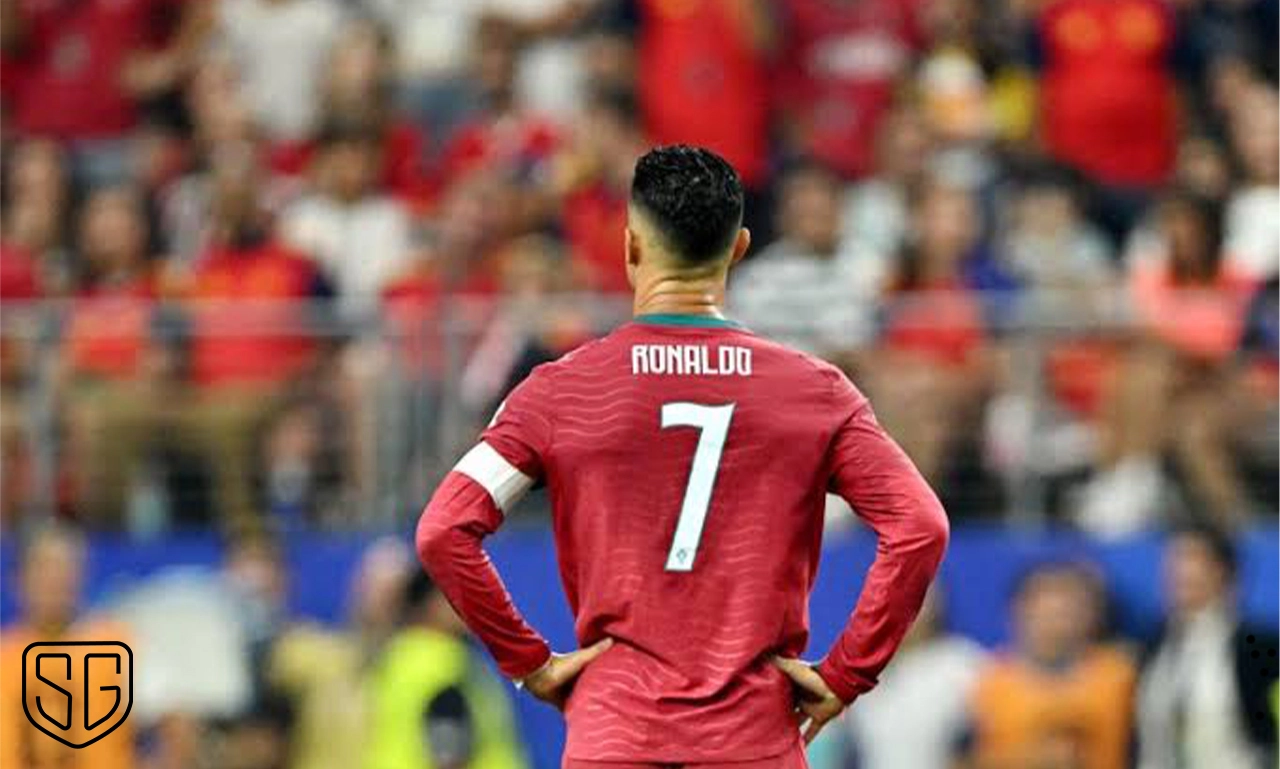
Ronaldo hasn't confirmed anything about 2030, but he hasn't ruled it out either, and that gap is doing a lot of work in this debate. In June, before this World Cup even began, he told journalist Fabrizio Romano he had "not ruled out" playing in 2030. After Portugal's exit, his answers turned more mixed: at a Riyadh event he said "Definitely yes" when asked if 2026 was his last World Cup, yet days later, facing criticism over his performances, including a heavily scrutinized display against DR Congo in the group stage, he pushed back hard on retirement talk generally, insisting: "I will retire when I want to, not when you want me to."
Off the pitch, the contract picture keeps the door open rather than closing it. Ronaldo signed a two-year extension with Al-Nassr through June 2027, a deal he said comes with "no finish line" to his ambitions. He's also chasing 1,000 career goals, sitting in the 930s combined for club and country at his last renewal, a milestone that may require playing well beyond 2027, conveniently overlapping with a 2030 World Cup run-up.
The Case For and Against
The case against is real. Ronaldo would be 45 during the tournament, matching the age of Egyptian goalkeeper Essam El Hadary, the current record-holder for oldest World Cup player, meaning Ronaldo would need to break that mark as an outfield player, a far more physically demanding ask. Portugal's attack has also relied less on him for goals this tournament, and pundits, including Thierry Henry, openly criticized his group-stage form.
The case for is just as real. Few players have defied typical decline curves the way Ronaldo has, still scoring at a prolific rate in his 40s; his penalty for Croatia in this tournament proves he's still delivering when it counts. Portugal hosting removes the travel and adaptation questions that complicate most aging stars' plans. And, as of this week, both his outgoing and incoming national coaches have publicly and repeatedly backed the idea without hesitation.
The Verdict
As things stand on July 14, 2026, nobody, including Ronaldo, has confirmed he'll be playing in the 2030 World Cup, and treating it as settled would be getting ahead of the facts. But the ingredients are unusually favorable: a home tournament, a coach signed specifically through 2030 who keeps reaffirming his support, a contract situation that leaves the door open, and a player who insists his ambition has no finish line. If any 41-year-old in world football were going to stretch a career to a seventh World Cup at 45, on his own soil, Ronaldo is about as safe a bet as it gets. Whether he actually does it is a decision only he will make, but right now, the door is very much still open.