No: you cannot commit an offside offence by receiving the ball directly from a throw-in. The exception applies even if you are beyond the defenders. However, it does not protect every later pass in the same attack. Once a team-mate touches the ball, normal offside assessment can become relevant again.
This guide was checked on 16 October 2026 against the current Laws of the Game. It separates the initial throw, the next touch and other offences that can still stop play. The examples below are hypothetical teaching situations, not descriptions of particular professional matches.
What does the throw-in offside rule say?
IFAB Law 11.3 lists throw-ins among the restarts from which a player may receive directly without committing an offside offence. Goal kicks and corners are the other two. This explains why an attacker can wait behind a defensive line for a long throw rather than timing the same run they would make for a through pass.
The important word is directly. A team-mate's flick or header creates a different situation. At that touch, the next receiver's position matters. A player in an offside position is penalised only if they then become involved in active play, rather than merely standing there. An offside offence results in an indirect free kick.
Three situations to distinguish
Direct reception: imagine a red-shirted winger waiting near the corner of the penalty area. The thrower sends the ball straight to that winger, who controls it. Being behind the defenders does not by itself make that reception illegal.
A team-mate's flick: now imagine a different red player heading the throw towards the winger. The assistant must assess the winger at the header, not simply remember that the attack began with a throw-in. That difference can turn two apparently similar movements into different decisions.
A return pass: the thrower steps back onto the pitch and asks for the ball. They should check their position before the receiver returns it. The throw-in exemption is not a permanent exemption for the person who took it. These examples apply the ordinary offside framework set out in The FA's Law 11 guide.
Why the ball and the second-last opponent matter
For a subsequent pass, look at the receiver's head, body and feet in the opponents' half. Arms do not determine offside position. The comparison is with both the ball and the second-last opponent, not automatically the goalkeeper or a player described as the last defender. Being level with the second-last opponent is onside. A backwards-moving receiver can still be penalised if they were offside when the relevant team-mate touched the ball.
The throw must still be taken correctly
The exemption does not excuse an incorrectly taken restart. Under IFAB Law 15, the thrower faces the pitch, uses both hands and delivers the ball from behind and over the head. Part of each foot must remain on the touchline or the ground outside it at delivery. Opponents must respect the required two-metre distance.
A throw-in cannot produce a goal without another player touching the ball. If it travels untouched into the opponents' goal, the restart is a goal kick; if it enters the thrower's own goal untouched, the opponents receive a corner. The thrower also cannot simply chase their own delivery and touch it again before another player does.
Can the goalkeeper catch a team-mate's throw?
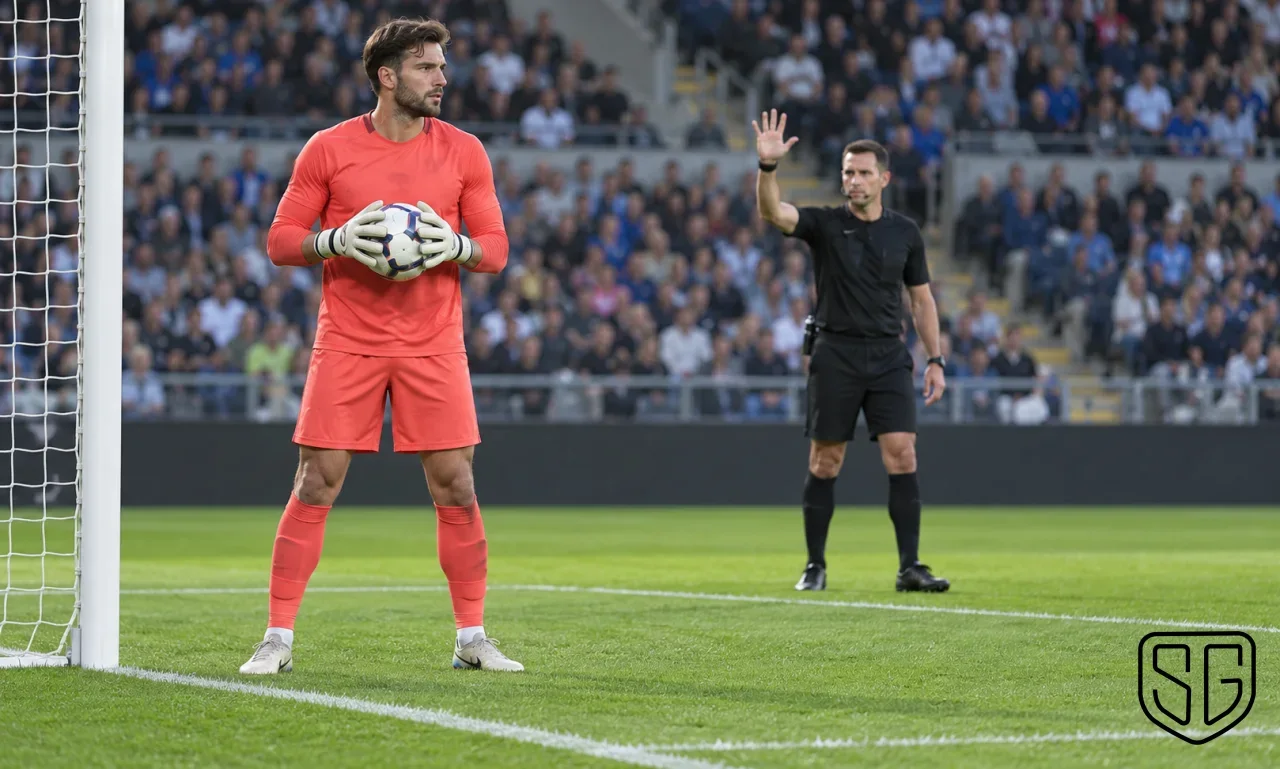
No, not directly. IFAB Law 12 restricts a goalkeeper from handling a ball received directly from a team-mate's throw-in inside their own penalty area. The restart is an indirect free kick. That is a handling restriction, not an offside decision, so the absence of offside does not make catching the delivery permissible.
Fouls remain separate too. An attacker cannot use the exemption as permission to hold or push a marker. When watching a disputed long throw, identify what the referee actually penalised before assuming the decision contradicts the offside exception.
A simple way to review the next incident
Watch the sequence rather than a single freeze-frame. First identify the restart, then follow each touch and finally the referee's signal. For training, rehearse a direct reception and a flick-on as separate exercises, asking players to explain what changed. This makes the distinction easier to recognise at full speed without relying on shouted appeals from either team.
For another restart exception, read our explanation of offside from a goal kick. The practical takeaway for throw-ins is to separate receiving the original delivery from what happens next: the initial exception does not settle every decision in the attack.