A football training routine for beginners works best when every block has a purpose. This suggested twenty-minute session combines gentle preparation, controlled touches, a receiving task and a short review. It is a flexible example for a comfortable practice day, not a requirement to train hard every day or a promise of rapid improvement.
You need a ball, appropriate footwear and a clear, suitable surface. Children should have appropriate adult supervision. Adjust the session to your experience and available space, allow pauses, and stop if an activity causes pain or feels unsafe. Completing fewer careful repetitions is preferable to rushing simply because a timer is running.
Minutes zero to three: prepare and check the space
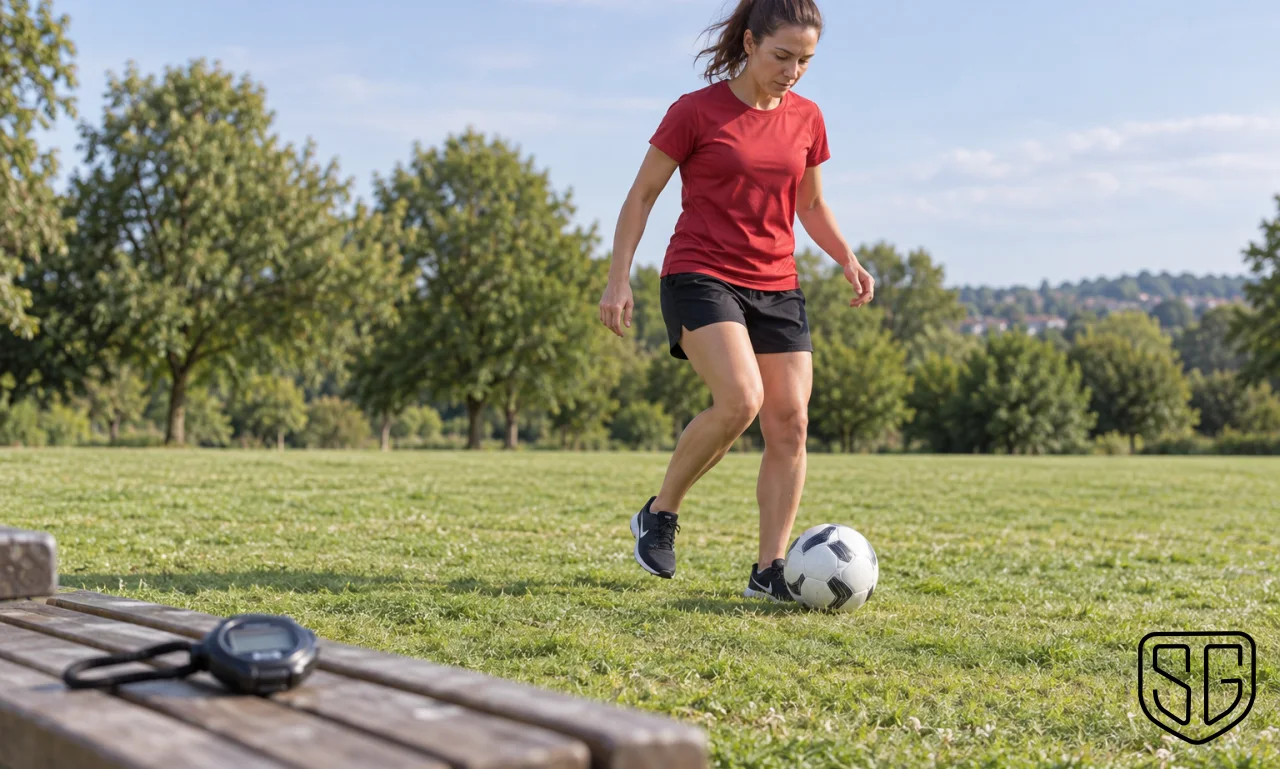
Start with comfortable walking and easy changes of direction. Check the ground for loose objects, slippery patches and anything that could trip you. Introduce the ball gradually, taking light touches at walking pace. This opening block is preparation, not a test of how quickly you can move or how tired you can become.
Identify a starting point, a clear turning area and a stopping margin. Keep them close enough for controlled movement but well away from walls, glass and other people. If space does not permit travelling safely, use stationary touches throughout. A timer can organise practice; it cannot make an unsuitable location safe.
Minutes three to seven: explore controlled contacts
Alternate gentle inside-foot touches, then try a small sole roll followed by a stop. Work slowly enough to understand where the ball goes after each contact. Use both feet without forcing equal speed. Pause between short rounds to reset your stance rather than trying to continue after balance has already gone.
The FA describes ball mastery as learning to manipulate the ball using varied contacts, directions and speeds. This block borrows that broad coaching principle, not a prescribed repetition count. Choose one movement that needs attention and spend the remaining time making it more predictable instead of collecting increasingly difficult tricks.
Minutes seven to eleven: receive and prepare
On a suitable outdoor surface, gently roll the ball ahead and move to stop it in a generous receiving area. Next, direct the touch slightly to one side so the ball is ready for another action. Alternate directions. The objective is a useful ball position, not stopping it beneath your body every time.
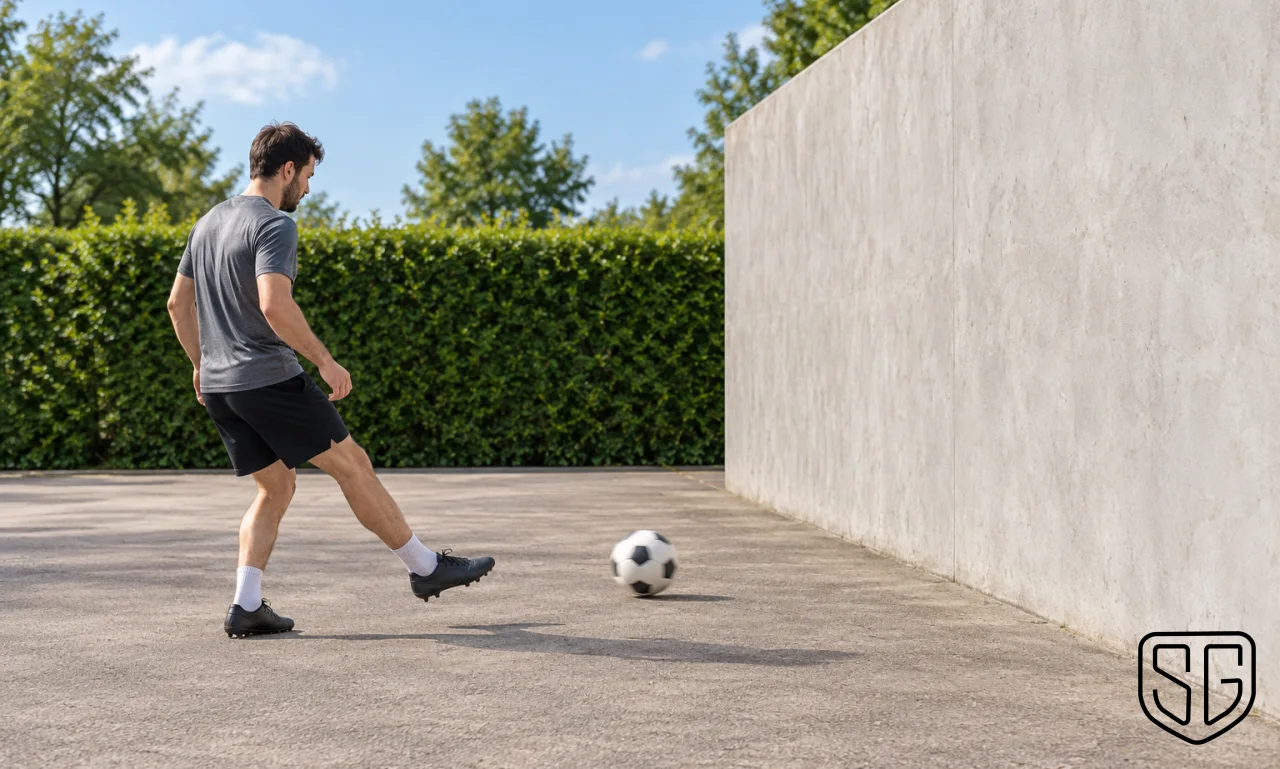
If you have permission to use a safe rebound wall, substitute soft passes and controlled returns. The FA passing guidance considers how delivery helps the next action. Apply that idea by asking whether your first touch makes the following pass easier. Our wall-passing guide covers that separate option in more detail.
Minutes eleven to fifteen: turn and leave with control
Travel slowly towards your turning area, redirect the ball with the inside or sole of the foot and take a balanced first step away. Practise each side separately before linking them. Leave space to slow down. Do not add a sharp acceleration if you cannot reliably keep the ball within reach after turning.
Change only one condition during this block. You could use the other foot, choose a different exit or slightly alter the approach distance. Trying all three at once makes it difficult to identify what caused an error. When a movement repeatedly breaks down, return to a smaller, slower version before attempting the full sequence again.
Minutes fifteen to eighteen: connect two actions
Combine a controlled reception with a turn, or a short dribble with a gentle pass towards a safe ground target. Leave time between attempts to look up and choose the next direction. Count balanced sequences, not just contacts. An uninterrupted string of touches is not useful if the ball continually dictates where you must run.
This remains unopposed practice. The FA practice spectrum explains why realistic football situations are needed to develop skill in context. A solo routine cannot recreate a defender's challenge or a team-mate's movement. Use club training, suitable small-sided games or coached sessions to explore those decisions when opportunities arise.
Minutes eighteen to twenty: ease down and record one lesson
Finish with easy movement and a few comfortable touches rather than another demanding challenge. Record one successful action and one specific difficulty. For example, note that left turns stayed close but right turns needed an extra recovery step. That observation gives your next session a clear starting point.
The word daily describes a possible habit, not a demand to repeat the same workload regardless of fatigue, matches or other activity. Take recovery into account and shorten or skip practice when appropriate. Keep the structure flexible: the aim is regular, attentive learning, not protecting a streak or meeting an arbitrary total of minutes.