To practise your weak foot in football at home, give the less comfortable foot simple tasks that you can complete with balance and control. Start with stopping and moving the ball, then add gentle passing where the space allows. Do not begin by copying the power or pace you use with your preferred foot.
This is an original suggested progression for beginners, not a promise that both feet will become identical. England Football Learning describes ball mastery in terms of manipulating the ball through different directions, speeds and contacts. Your aim here is to expand the actions you trust with the less familiar foot, one at a time.
Choose one action to measure
Pick a simple baseline, such as stopping a gently rolling ball inside a clear patch. Try five attempts with each foot, using similar speed and distance. Record where the weaker side struggles. A missed stop, a poor support position and a heavy follow-up touch are different problems and should not all receive the same correction.
Avoid labelling the whole foot useless after one poor round. You may be comfortable with a sole stop but uncertain about an inside pass. Write the action in your notes, not just a score. That makes the next session specific enough to repeat and prevents every practice becoming a vague effort to improve everything.
Begin with close touches
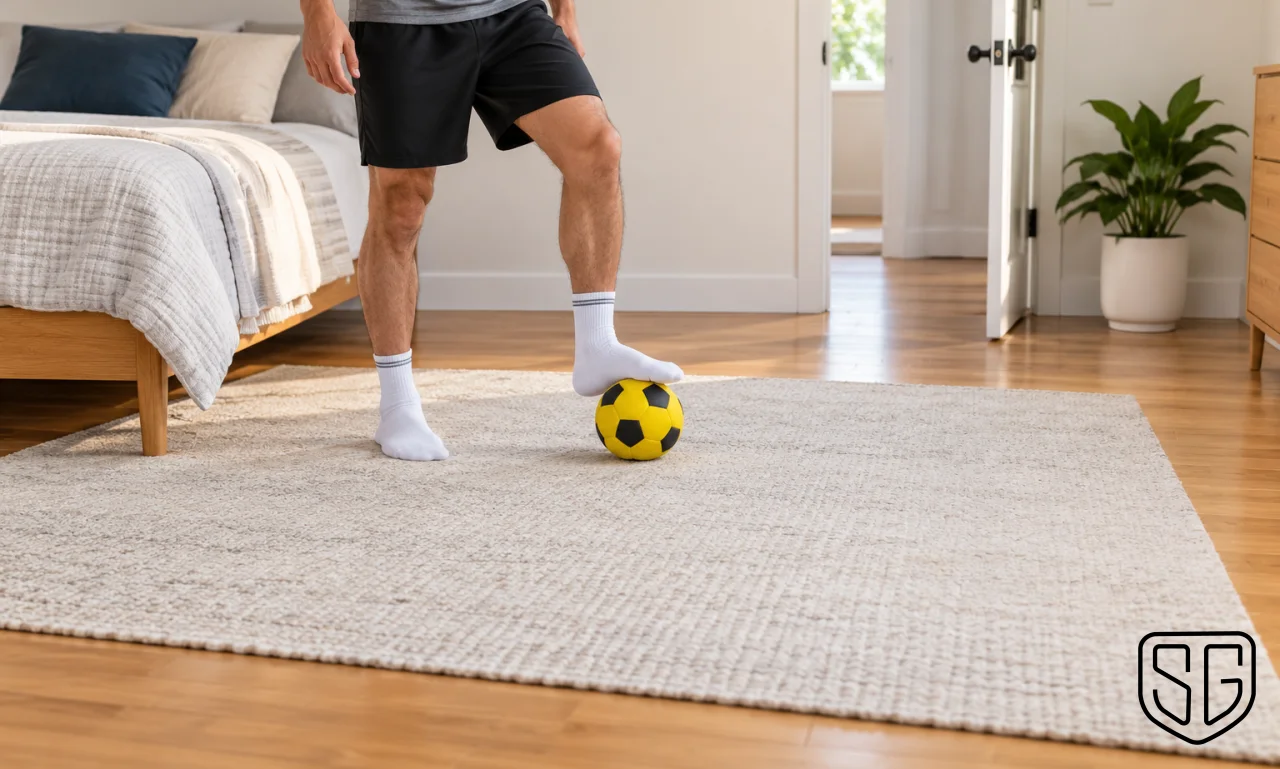
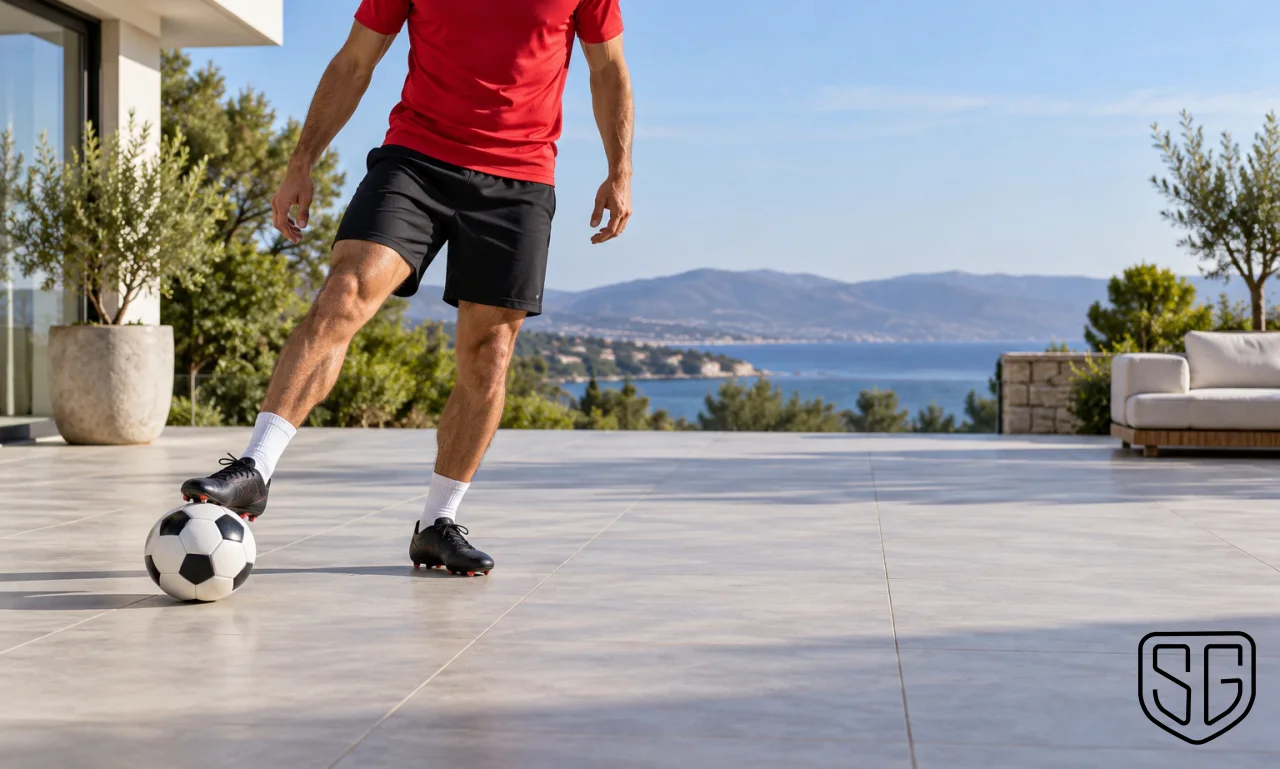
Use the weaker foot to roll the ball a short distance forward and bring it back with the sole. Keep the other foot planted comfortably, not rigidly. Follow with a gentle outside touch and an inside touch back towards the starting place. Use small movements and pause whenever you begin reaching for the ball.
Perform the same movement once on your preferred side to notice the difference in body position, then return to the weaker side. This is a comparison, not a competition between feet. If balance is the issue, make the movement smaller rather than trying to fix it by touching the ball faster.
Introduce a gentle pass where permitted
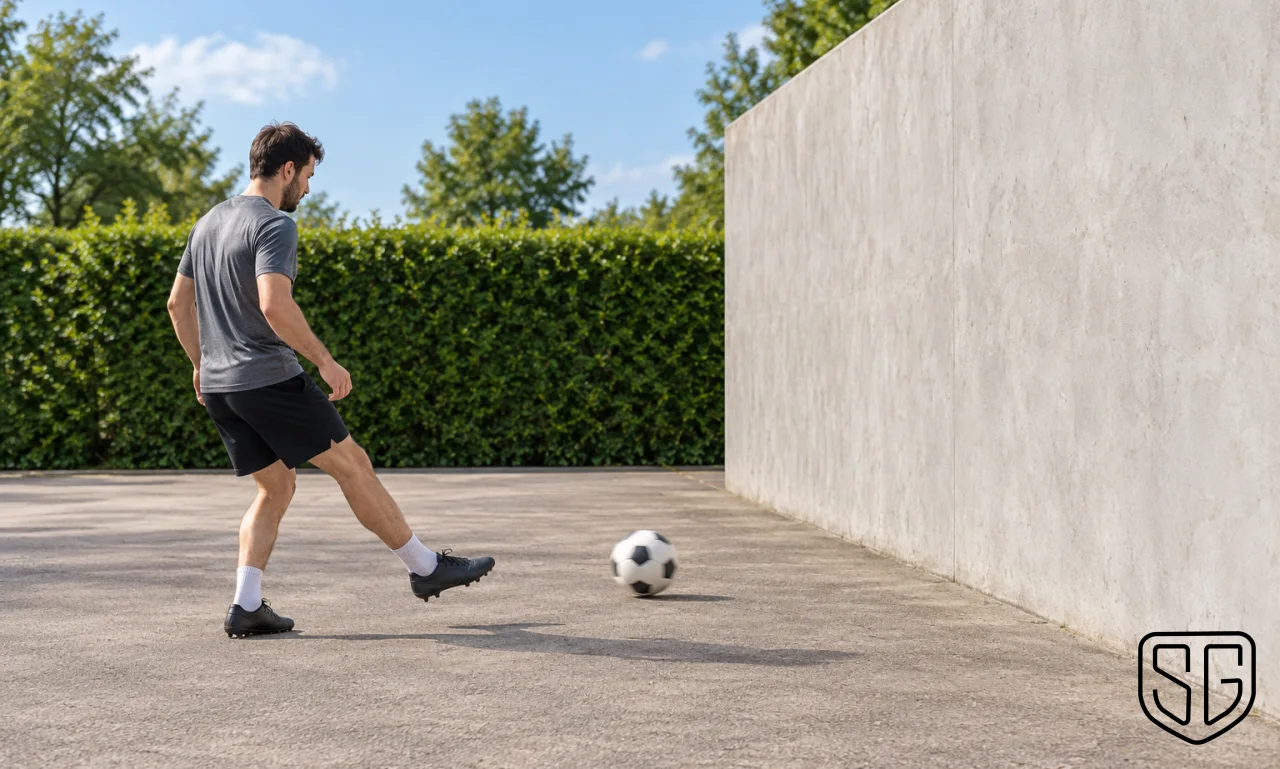
Use a suitable outdoor wall only with permission and a clear rebound area. Take a controlled touch, position yourself and pass softly with the inside of the weaker foot. Stop the return before starting again. The FA passing resource discusses a range of techniques; short ground passing is the manageable choice for this stage.
If there is no safe wall, do not improvise against a bedroom door or furniture. You can gently move the ball across a clear outdoor patch and walk to retrieve it instead. That offers fewer repetitions, but safety and permission are more important than maintaining an uninterrupted passing rhythm at home.
Progress towards a useful sequence
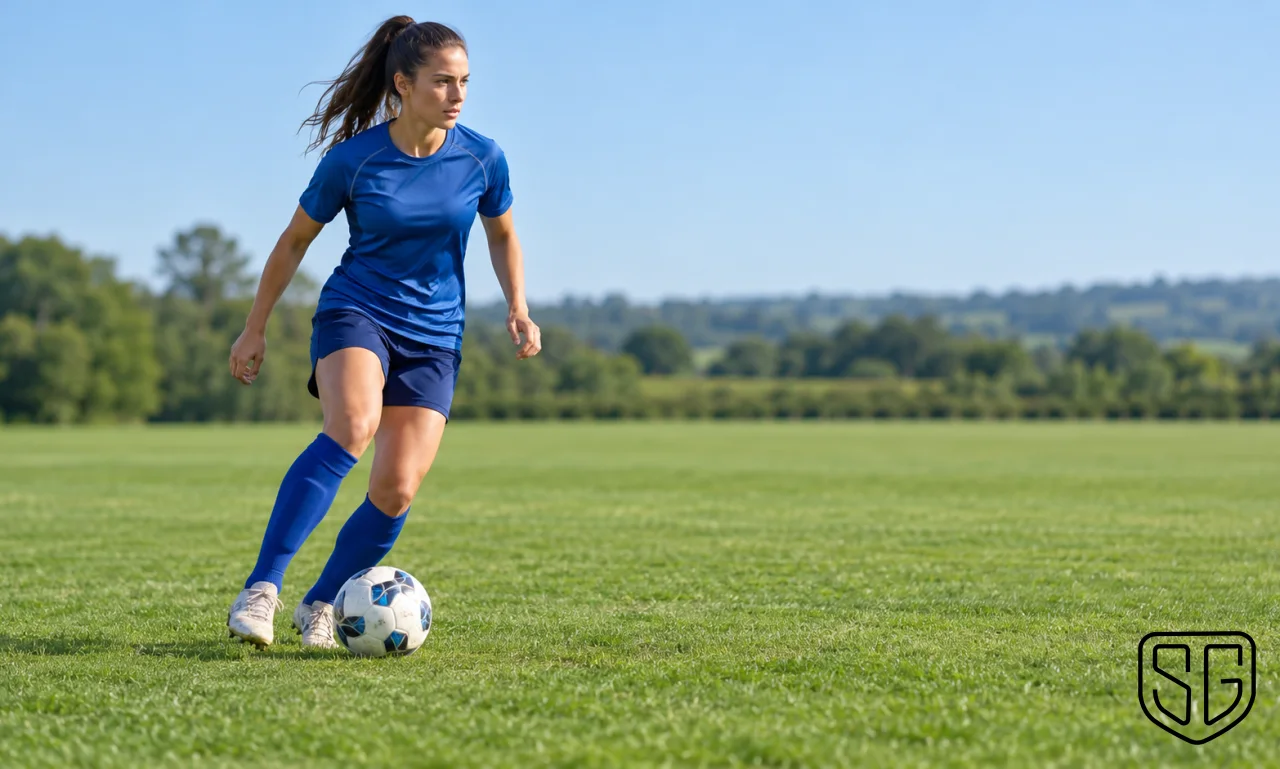
Link a stop, a small directional touch and a pass. Begin with plenty of time between the actions. Then reduce the pause slightly while keeping the ball within reach. Practise more than one exit direction so the foot does not become comfortable with only a single rehearsed movement.
For an example session, choose two close-touch tasks and one passing task, with short rests between rounds. Stop while the contacts remain deliberate. These are technical repetitions rather than a conditioning circuit. More attempts are not automatically better if fatigue makes you swing at the ball or lose your support position.
Check progress without exaggerating it
Repeat the original five stops on a later session using the same surface, ball and distance. Compare controlled attempts and the type of errors. You may improve accuracy before speed. Resist making every test harder at once, because changing several conditions prevents a fair comparison with the earlier result.
England Football Learning distinguishes solo technique work from game-based skill. A comfortable home pass still needs testing against pressure and moving team-mates. Use our first-touch training guide for receiving practice, then seek an appropriate coached or small-sided setting. The practical goal is another reliable option during play, not a guaranteed transformation or a fixed deadline for becoming two-footed.