To work on ball control without a training partner, organise practice around a problem you can observe: a touch that runs too far, an awkward turn or difficulty looking away from the ball. Choose one problem, set a manageable challenge and repeat it under the same conditions so you can tell whether control is becoming more dependable.
This guide offers an original solo practice method. It is different from collecting as many tricks as possible. FIFA Training Centre coaching on ball control highlights close touches, body movement and recognising space. You can explore those elements alone, although the pressure and decisions created by opponents must eventually be experienced in games.
Establish a repeatable baseline
Find a safe clear area with enough room to stop. Walk a short route with the ball, turn and return. Repeat five times at a comfortable pace. Count the attempts in which you keep the ball within an easy next step and finish without crossing your chosen boundary. Use visible ground markings rather than furniture.
Write down what caused each unsuccessful attempt. Was the first touch too strong, did your feet become tangled, or did the turn push the ball into the wrong space? A number without that observation is less helpful. You need a description that points towards a practical change in the next exercise.
Separate touch size from movement speed
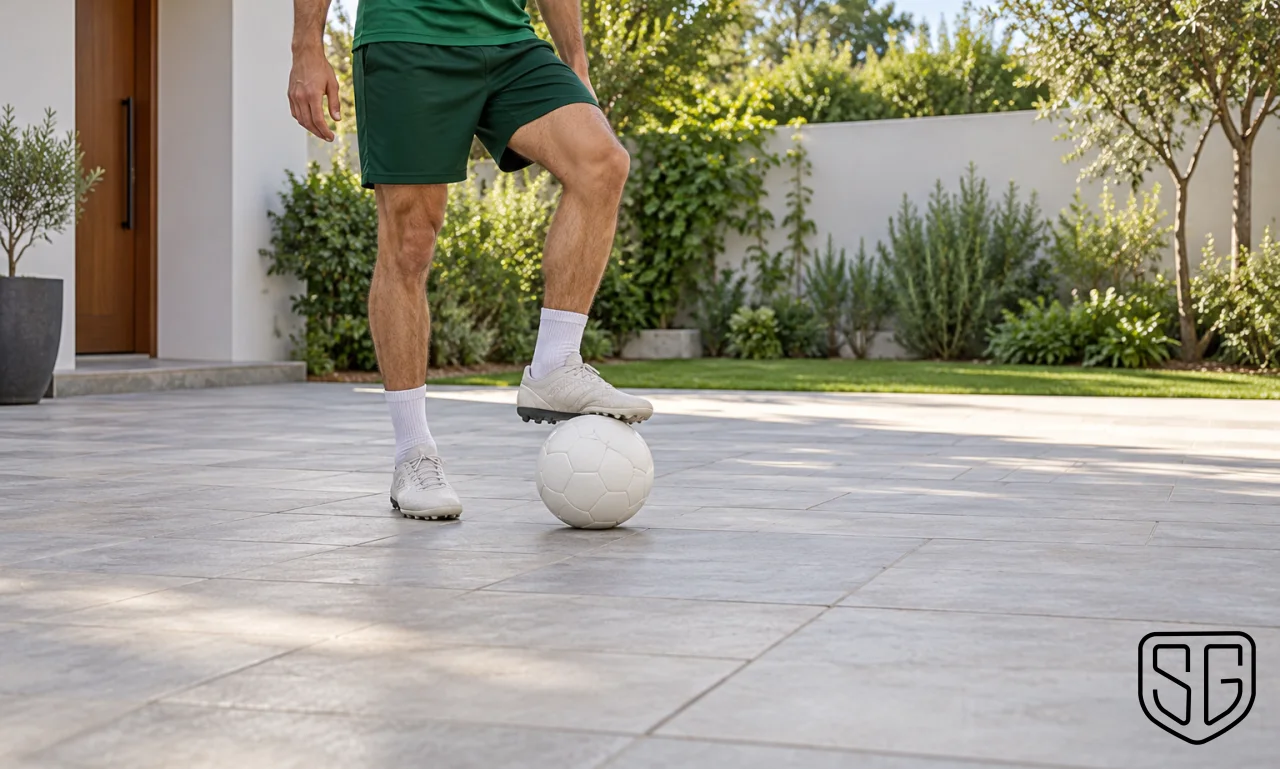
Begin almost in place, moving the ball left and right with the inside of your feet. Make each touch small enough that you can stop immediately. Then take walking steps while maintaining similar control. If the ball starts escaping, reduce the movement speed before making the area smaller or adding another skill.
A common mistake is to respond to a loose touch by moving faster to catch it. That may rescue the ball, but it does not fix the original contact. Pause, return to the starting point and try a softer touch. The aim of this round is a predictable ball path, not an impressive-looking recovery.
Practise a turn with a clear exit
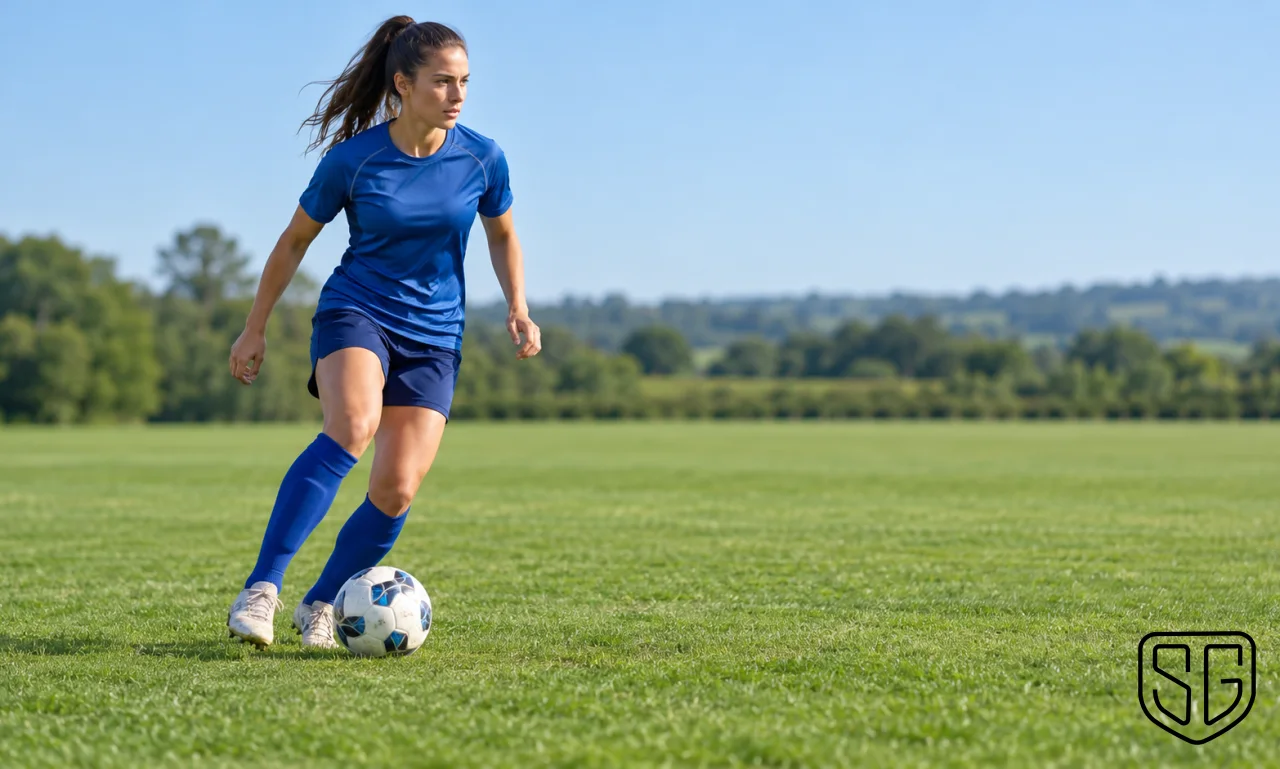
Approach your turning point slowly. Use the sole or inside of the foot to redirect the ball, then take a controlled first step into the new direction. Leave a generous stopping margin. Try the movement on each side separately before linking several turns into one continuous route.
Next, choose between two exits instead of always turning the same way. You might name left or right aloud before the approach. This is still a self-directed task, not a substitute for reading a defender, but it prevents every repetition becoming identical. Keep the instruction simple enough that the physical movement remains under control.
Add brief moments of looking ahead
Place your attention on a safe landmark ahead for a moment between touches, then look back as needed. Do not try to keep your head up continuously from the first attempt. Start with short glances while almost stationary and add movement only when you can recover the ball's position comfortably.
If you lose control every time you glance away, the task is too demanding at that speed. Reduce the pace or shorten the glance. Avoid introducing a phone screen that tempts you to look down at notifications while moving. The useful habit is gathering information without surrendering the next touch.
Retest and transfer the learning
Return to the original five journeys at the same speed and distance. Compare the number of controlled finishes and the type of mistakes. Keep conditions consistent: changing the ball, surface and route together makes it difficult to identify what improved. One good round is encouraging, but repeated tidy rounds provide a better picture.
England Football Learning explains that unopposed practice can develop technique, while realistic play is needed for applying it. When you next join a suitable game, choose one aim such as protecting the ball through a turn. Our first-touch training guide covers receiving; this method focuses on keeping possession once the ball is already yours.