No, a player cannot take a throw-in while kneeling under the standard Laws of the Game. IFAB Law 15 requires the thrower to stand facing the field of play. Keeping the ball in both hands and throwing it over the head is not enough if the player's starting posture fails that standing requirement.
This is a question about a legal restart, rather than how far somebody can throw. A kneeling player might produce a smooth, accurate delivery, but technique has several separate conditions. Coaches should teach the whole action together so a good pass does not become possession for the opposition because the thrower overlooked their stance.
What must the thrower do?
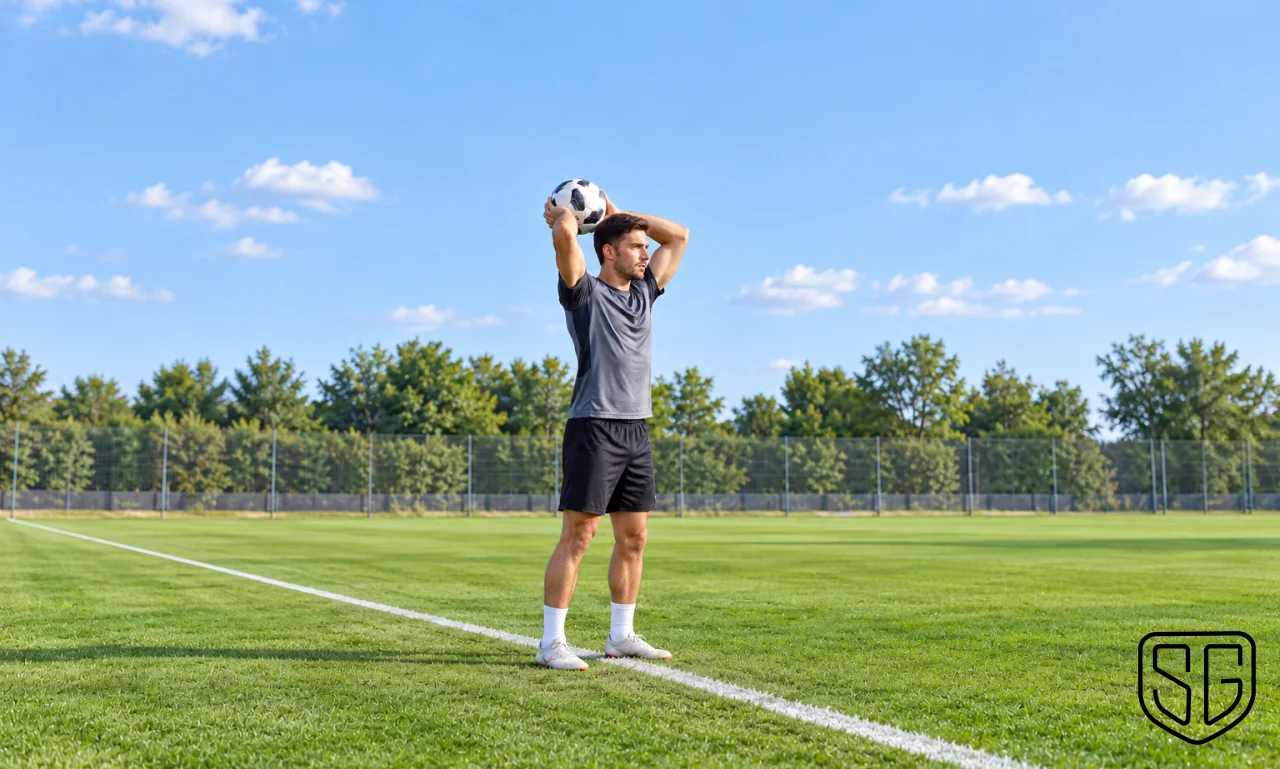
At delivery, part of each foot must be on the touchline or on the ground outside it. The player must use both hands and bring the ball from behind and over the head, from the point where it left the field. These requirements work together; complying with one does not compensate for breaking another.
A standing player can bend the knees during the movement. That is different from resting on one or both knees. Think of an ordinary controlled stance with both feet grounded, not an attempt to find a clever posture that preserves only a small part of the normal action. Beginners benefit from establishing balance before adding distance.
What happens after an incorrect delivery?
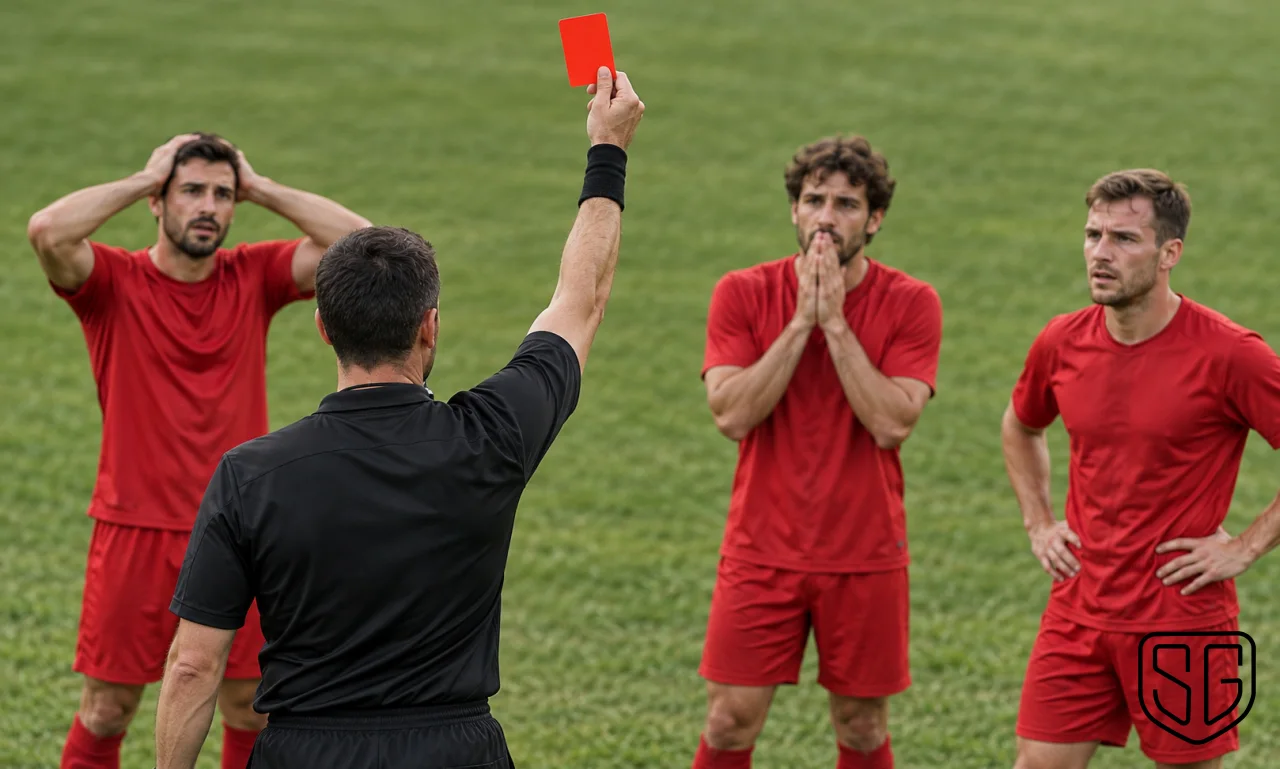
The usual consequence of a throw-in taken incorrectly is a throw-in for the other team. There is no automatic yellow card merely for making a technical mistake. Separate misconduct, such as delaying a restart or behaving aggressively, needs its own assessment rather than being assumed from an awkward throwing action.
Consider a hypothetical player who retrieves the ball, remains kneeling and throws to a nearby team-mate. The recipient's position does not repair the original problem. Nor does the fact that nobody complained make the action technically correct. The relevant observation is the thrower's posture at the moment of delivery.
Why the moment of release matters
A photograph taken before or after release can be misleading. Somebody may crouch to collect the ball, stand to deliver it, then stumble afterwards. That sequence should not be described as a kneeling throw-in merely because one frame shows a knee close to the grass. Review the actual delivery before drawing a conclusion.
The same care applies to foot position. A foot can extend partly over the painted line while another part remains on it. That is not the same as having the entire foot inside the field. The rule is about the required contact, not a demand that every part of both boots stays beyond the paint.
Practise the movement without rushing
Use a safe outdoor area and a clear line. Begin without throwing: face the playing area, place both feet, and rehearse bringing the ball behind the head. Then deliver a short throw to a willing partner. Ask them to check one condition at a time instead of trying to correct everything during a long throw.
A useful sequence is five short controlled deliveries, a pause to review balance, then five towards a different target. Those numbers are an example practice plan, not an IFAB prescription. Stop if the action is uncomfortable, and do not practise overhead throws indoors near lights, glass or people who are not participating.
Related restart questions
A legal standing delivery still does not let a team score directly from the throw. Our direct throw-in goal guide explains that separate restriction. A goalkeeper receiving a team-mate's throw also faces specific handling rules, covered in our goalkeeper throw-in guide.
For a quick touchline check, look for a standing thrower, the right foot contact, a two-handed overhead movement and the correct location. Those observations are more useful than judging power or style. This explanation was checked against the current IFAB law on 22 October 2026; modified recreational formats should be checked against their own published competition rules.