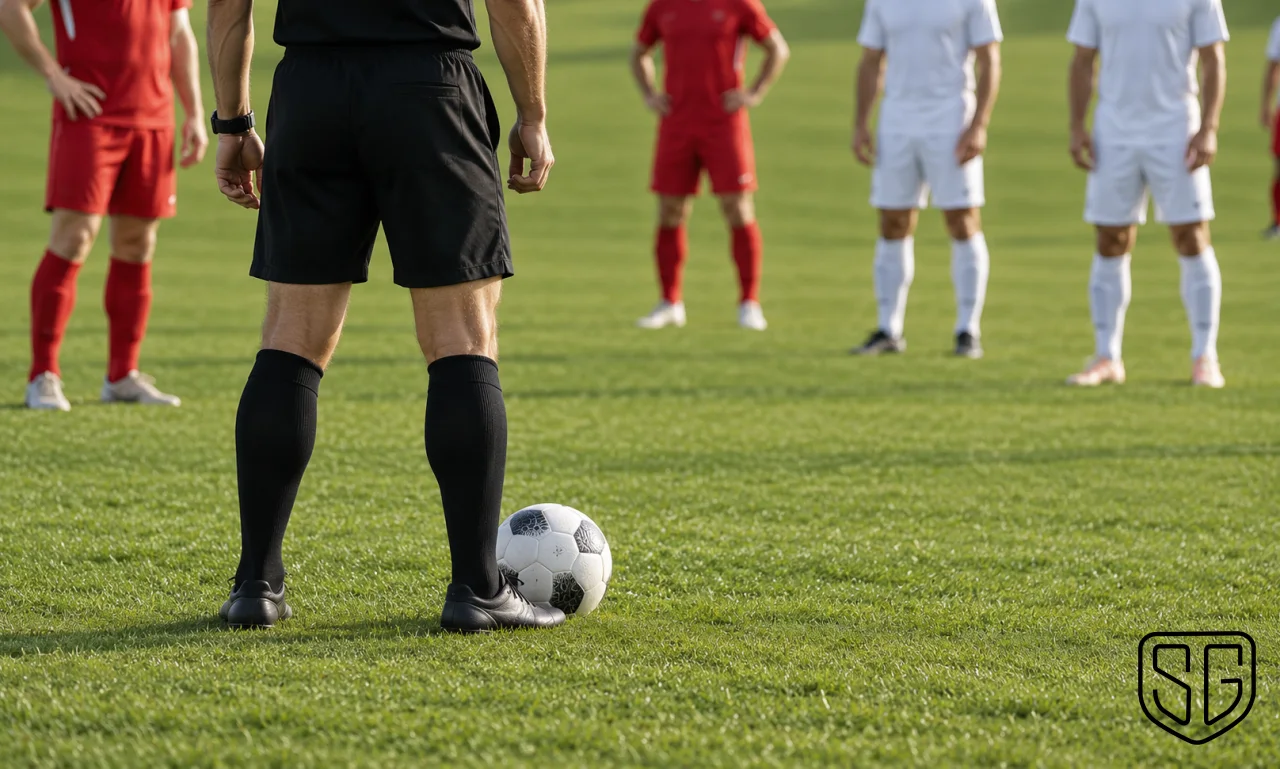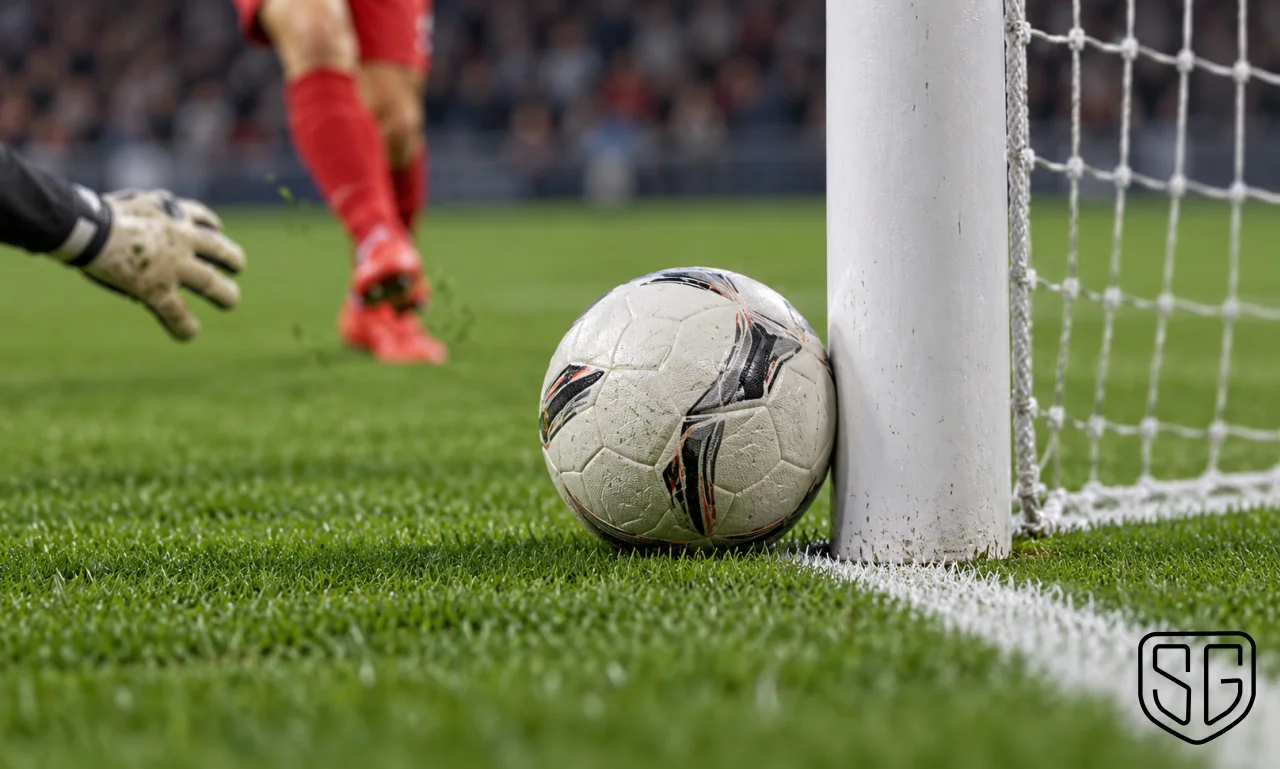
If a penalty hits the post and comes back to the taker without touching another player, the taker cannot play it again. IFAB Law 14 requires another player's contact before the kicker's next touch. A deliberate second kick normally gives the defending team an indirect free kick, rather than a second chance to score.
The goalkeeper's involvement can change the answer. A rebound only from the goal frame is different from one that also touches the goalkeeper. There is a further distinction between a penalty during ordinary match time and a kick in a shoot-out. Those details explain why one rebound can be followed up and another cannot.
Why does the post not count as a touch?
The law requires contact by another player. A goalpost, crossbar or bounce on the ground cannot meet that condition. The frame can redirect the ball dramatically without creating a new right for the taker to play it. The restriction follows the player who took the kick, rather than the ball's distance travelled.
Imagine a hypothetical penalty struck against the inside of the right-hand post. The goalkeeper dives the other way and never touches it. The ball rolls back towards the penalty mark. If the original taker steps forward and scores from that rebound, the goal cannot stand because the taker has played it again before anybody else.
What if the goalkeeper touches the rebound?
During normal match play, a genuine touch by the goalkeeper satisfies the requirement for another player's contact. The taker can then normally follow up, subject to any other infringement and the ball remaining live. The order can be post then goalkeeper, or goalkeeper then post; what matters is whether the keeper actually touched it.
That can make a very small contact decisive. A glove brushing the shot is different from a glove passing close to it. When watching a replay, follow the ball's path and look for evidence of contact instead of relying on the goalkeeper's reaction. A keeper may appeal because they believe there was no touch, but the appeal itself does not establish the sequence.
Can a team-mate score instead?
In an ordinary penalty situation, another attacker can play a live rebound if they have complied with the positioning and encroachment requirements. The ban on a second touch by the original kicker does not mean every team-mate is barred from following in. Our passed-penalty guide explains those starting-position requirements.
Consider a different hypothetical example: the same untouched post rebound reaches an attacker who waited legally outside the area until the kick. That player may finish the opportunity if the sequence is otherwise lawful. Their contact also means the original taker would no longer be waiting for somebody else to touch the ball before becoming involved again.
Does the ball stay in play after striking the frame?
Law 9 keeps the ball live when it rebounds from the frame and remains on the field, unless another reason has stopped play. Crossing the boundary or a referee's whistle changes that. Being live and being playable by the original kicker are separate questions: a live ball can still be subject to the second-touch restriction.
Positioning can create additional questions as the move develops. Law 11 covers involvement from an offside position. Players should not assume that a rebound resets all restrictions simply because it feels like a fresh chance. The referee evaluates each relevant contact and offence in sequence, including any encroachment at the original penalty.
Why is a shoot-out different?
Under Law 10's shoot-out procedure, the kicker cannot take a follow-up shot. A goalkeeper's save does not turn the shoot-out kick into open play. The original ball may still enter the goal while the kick remains in progress, but the taker cannot chase the rebound and shoot again as they might after a save during the match.
A penalty taken in additional time solely to complete a half also has a special completion rule in Law 14. It should not be treated as an unlimited invitation to play rebounds. Likewise, the current provisions for an accidental immediate double contact while taking the kick concern a different incident from deliberately following up a later post rebound.
The practical check is straightforward: was this a match penalty or shoot-out, did another player touch it, and was play still live? Those facts settle the basic rebound question before other offences are considered. These hypothetical examples use the current IFAB rules checked on 21 October 2026.