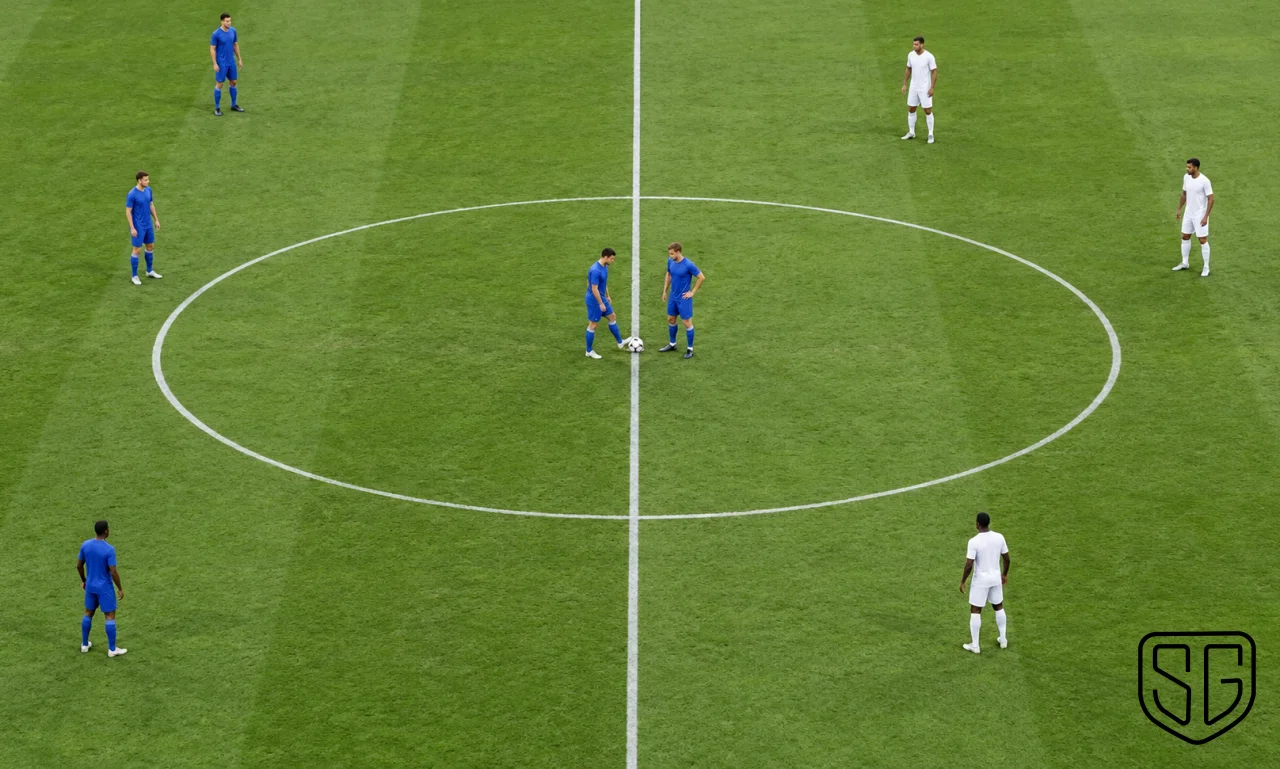
Yes, a penalty kick can be passed to another player during a match, provided it is kicked forwards and the other requirements are met. The taker does not have to shoot. IFAB Law 14 for 2026/27 includes an official example in which the identified kicker plays the ball forward and a team-mate enters legally to score.
This is not permission for two attackers to stand together over the penalty mark. The supporting player must wait in the required position until the ball enters play. The difference between a legal routine and an infringement is often timing: the pass itself may be permitted while the runner's early movement makes the resulting goal invalid.
What makes the pass legal?
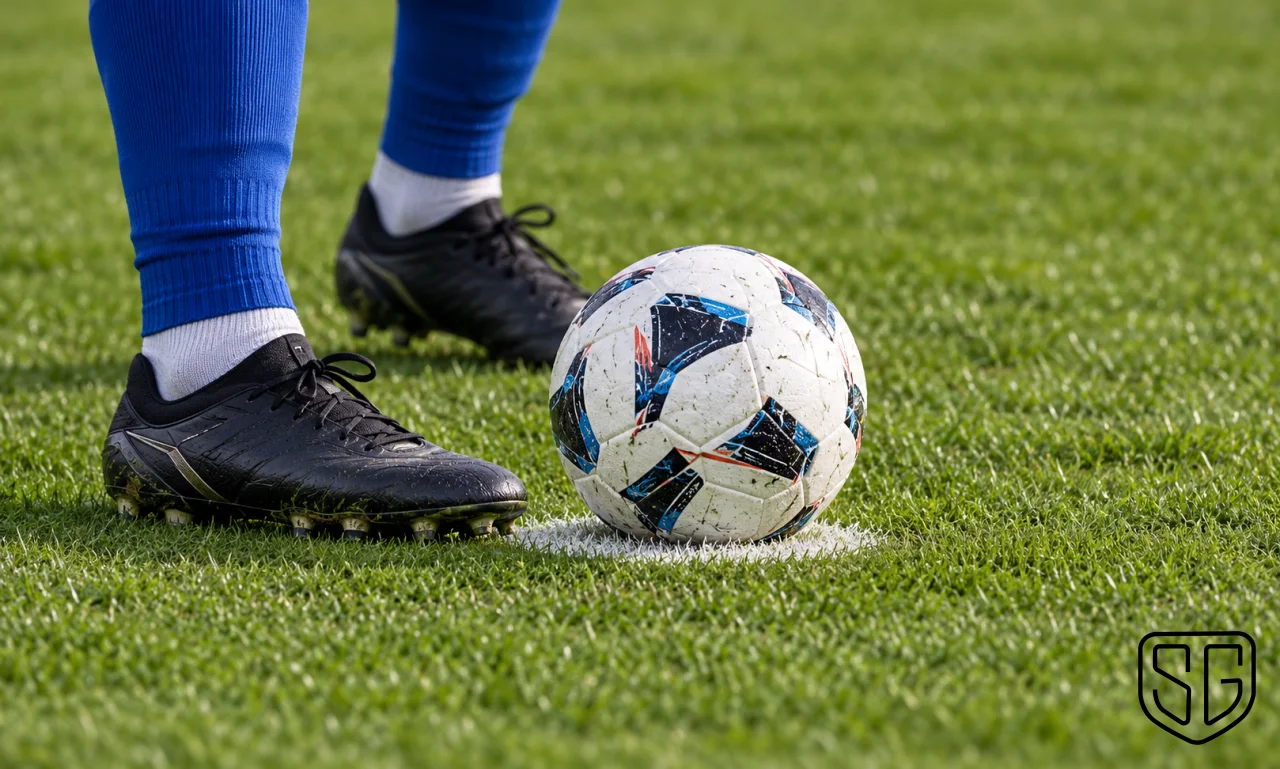
The ball must be stationary with part of it touching or overhanging the centre of the penalty mark. The taker must be clearly identified, and the referee signals when the kick may be taken. The ball enters play when kicked and clearly moving. The initial kick must go forwards; a backheeled delivery is permitted only if its direction is forward.
In a hypothetical routine, the taker gently nudges the ball towards goal. A team-mate who has waited outside the penalty area and arc runs in after that first kick and shoots. Provided there is no other offence, the goal can count. A sideways-looking camera angle is not enough to establish whether the first movement was actually forwards.
Where must the supporting player wait?
Law 14 requires players other than the taker and goalkeeper to be behind the penalty mark, outside the penalty area, inside the field and at least 9.15 metres from the mark. The penalty arc helps indicate that distance, but standing outside the area alone does not necessarily satisfy it. A runner beside the arc can still be too close.
The supporting attacker may move into the area only once the ball is in play. They cannot begin inside the box, anticipate the whistle as permission to enter, or cross the line before the kick. For training purposes, separate the referee's signal from the ball's movement: the signal permits the taker to act, while the kick determines when others can advance.
What if the runner enters early?
Current encroachment provisions consider impact. An attacking team-mate who enters early and then plays the ball to score or create a scoring opportunity is penalised. The official examples include an attacker scoring after an early entry and a rebound: the goal is disallowed and the defenders receive an indirect free kick. It is not safe to describe every early step as an automatic retake.
For a planned passed penalty, the runner is intended to play the ball, so lawful starting position and timing are essential. A routine cannot depend on an encroaching attacker being ignored because the initial pass was short. The referee assesses the whole sequence, including any simultaneous offences, using Law 14's outcomes rather than a blanket rule.
Can the original taker finish the move?
Only after another player has touched the ball. The taker cannot tap it forward, chase it and shoot again without an intervening touch. A deliberate second touch before another player normally results in an indirect free kick, with handball dealt with separately. A rebound from a post is not another player's touch, whereas a touch by the goalkeeper is.
A legal return pass from the supporting attacker can allow the original taker to shoot, subject to normal play and offside requirements. The forward-pass routine does not grant permanent immunity from other laws. Once the ball has been played, positioning, challenges and subsequent contacts still need to be judged.
Why is a shoot-out different?
Penalty shoot-outs have their own procedure: only the kicker, defending goalkeeper and referee remain in the relevant penalty area, and the kicker cannot play the ball again. There is no supporting attacker available to run onto a pass and finish. Likewise, a penalty taken in additional time solely to complete a half has special completion conditions under Law 14. Do not transfer an ordinary in-match routine to those situations without checking the procedure.
The simplest checklist is therefore forward first kick, clearly identified taker, correctly positioned runner and no premature entry. For a different restart comparison, our team-mate throw-in guide shows why an allowed pass does not necessarily permit every receiving action.