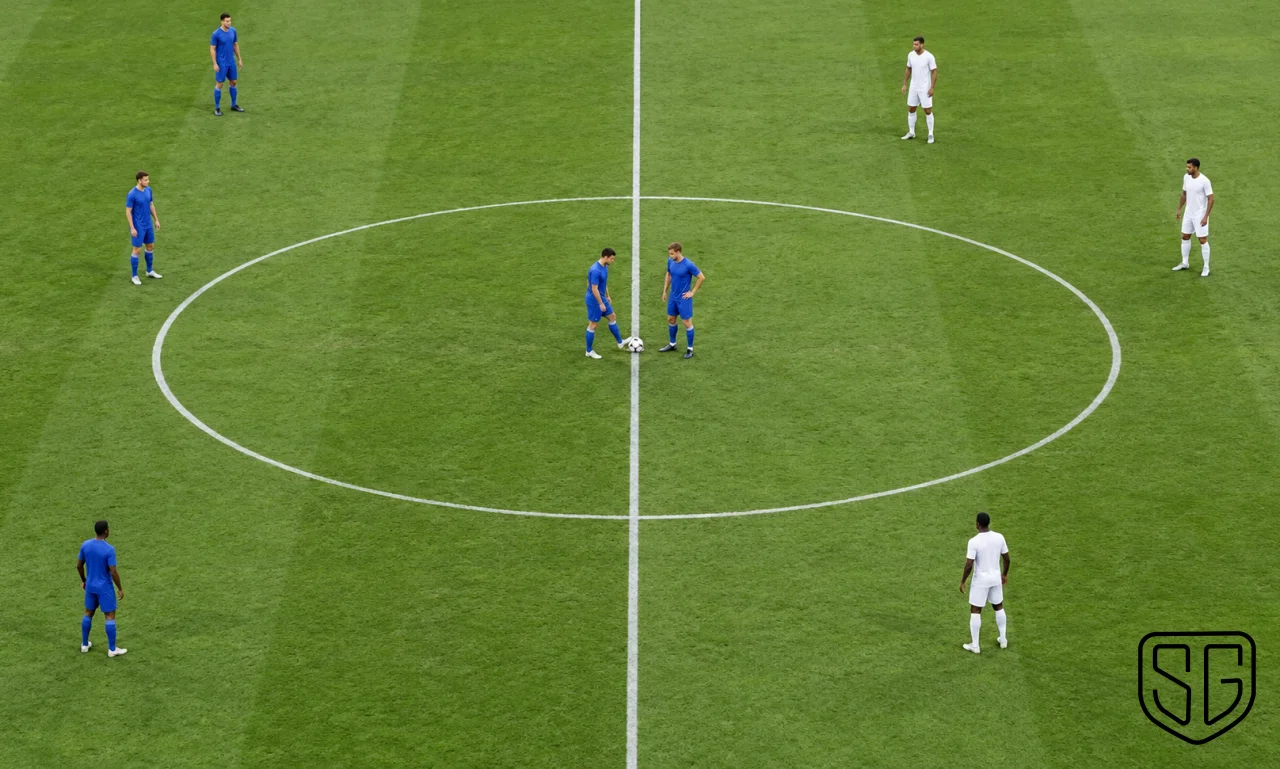
Yes, you can score directly from kick-off against the opposing team. The ball does not need to touch a team-mate, defender or goalkeeper before entering their goal. IFAB Law 8 for 2026/27 expressly allows this. However, if the kick-off goes directly into the kicker's own goal, the opponents receive a corner rather than being awarded a goal.
This permission applies to a genuine kick-off, not simply any kick taken near halfway. Kick-offs begin each half, each half of extra time and restart play after a goal. A free kick near the centre spot has its own rules. Identifying what the referee has awarded is therefore the first step in understanding an unusual long-range finish.
Does the ball have to go forward?
No. The current kick-off procedure says the ball enters play when it is kicked and clearly moves. It does not require a forward delivery. A team may pass backwards to organise possession, play sideways or attempt a direct shot. The direction chosen does not remove the requirement for the referee's signal or the other positioning conditions.
For an illustrative direct attempt, picture the identified player striking the stationary ball from the centre mark after the whistle. The opposing goalkeeper has stepped forward, and the ball travels over them into the net without another contact. The distance or unexpected nature of the shot does not invalidate it. The referee still checks that no offence accompanied the restart.
Where must everyone stand?
Except for the player taking the kick-off, every player must be in their own half. Opponents must also remain at least 9.15 metres from the ball until it is in play. The ball must be stationary on the centre mark, and the referee gives the signal. These requirements matter even when the taker intends only a short pass.
A defender cannot legally stand next to the ball to stop a surprise shot before it is kicked. Equally, an attacker cannot start beyond halfway simply because their team plans a quick delivery. An offence in the kick-off procedure can mean a retake. The spectacular final flight of the ball should not distract from where the players were at the start.
Can the taker touch the ball again?
The player taking the kick-off must wait for another player to touch the ball before playing it again. If they tap it forward and immediately kick it a second time, the normal restart is an indirect free kick to the opponents. A handball offence has its own direct-free-kick consequences under Law 8. One player cannot legally turn the kick-off into an uninterrupted two-touch dribble.
That is different from receiving a return pass after a team-mate has touched the ball. Once another player intervenes, the original taker can participate again, subject to the ordinary laws. When reviewing a disputed clip, count actual contacts rather than assuming a very short first touch was merely part of the run-up.
What about a direct own goal?
If an untouched kick-off travels backwards into the taker's own net, the restart is a corner to the other side. It is not a goal simply because the whole ball crossed the line. Law 8 provides a specific exception to the general Law 10 scoring rule. An intervening player's touch means it is no longer a direct entry from the restart.
For example, a hypothetical backward pass that rolls untouched past an absent goalkeeper results in a corner. If that goalkeeper instead touches the ball before it enters, the referee assesses the subsequent incident normally. The distinction depends on contact, not whether the backward pass was deliberate, ambitious or badly judged.
Do other restarts work the same way?
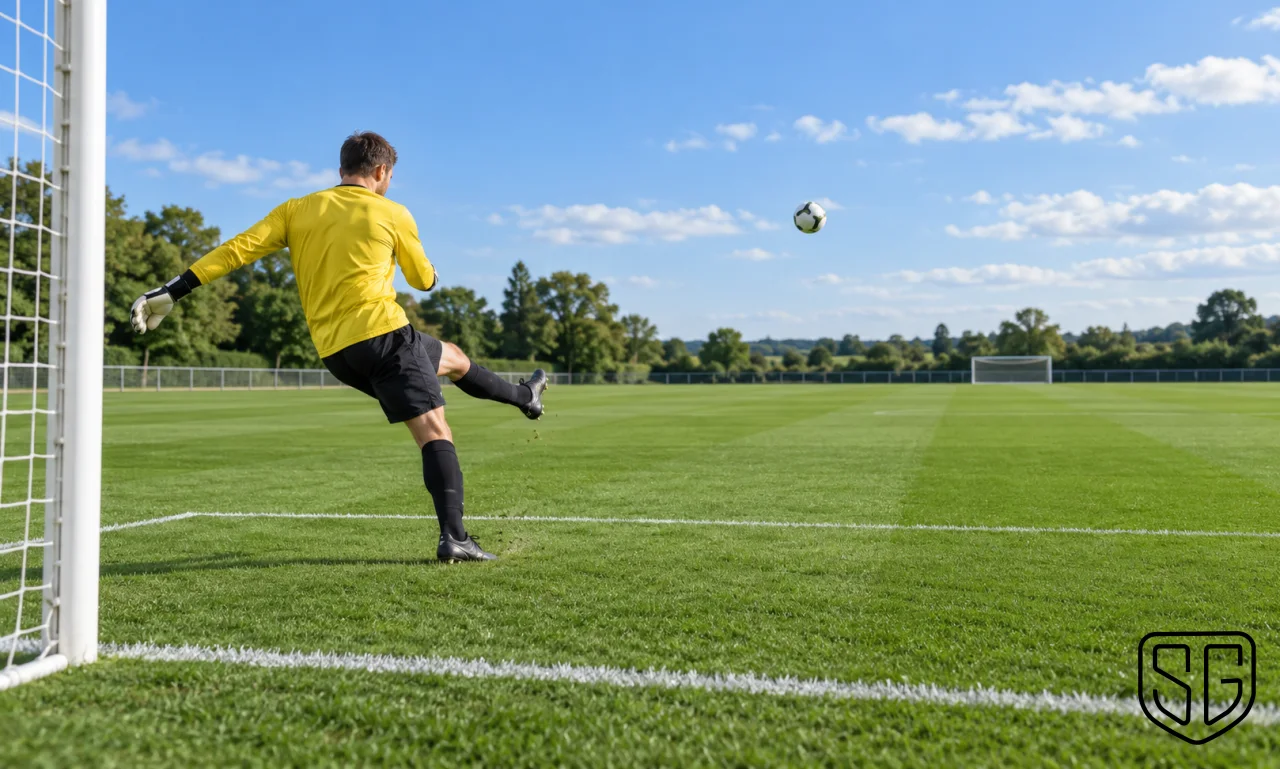
Not all of them. A throw-in cannot produce a direct goal, while a goal kick can score directly against the opponents. A dropped ball requires at least two players to touch the ball before a goal can count. SportsGround's goal-kick scoring guide offers another comparison. These are separate restart rules, not exceptions based on the player's position or shooting distance.