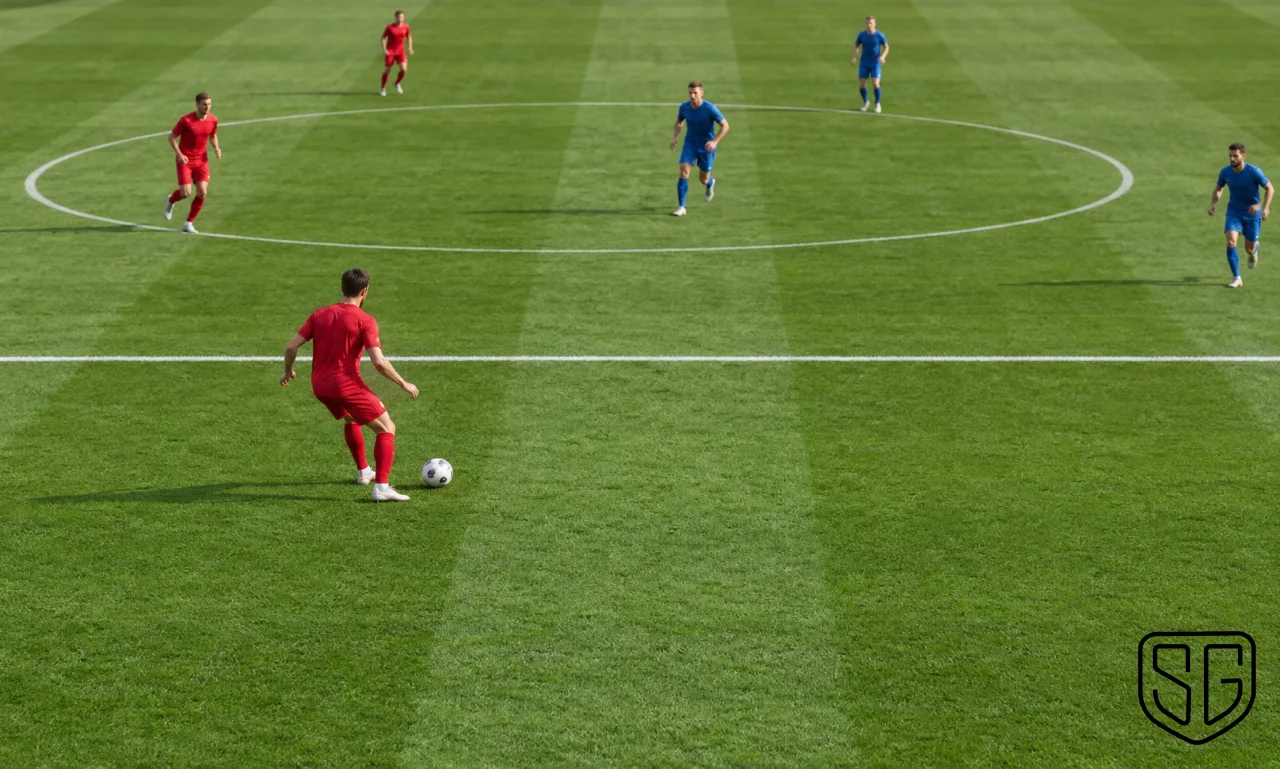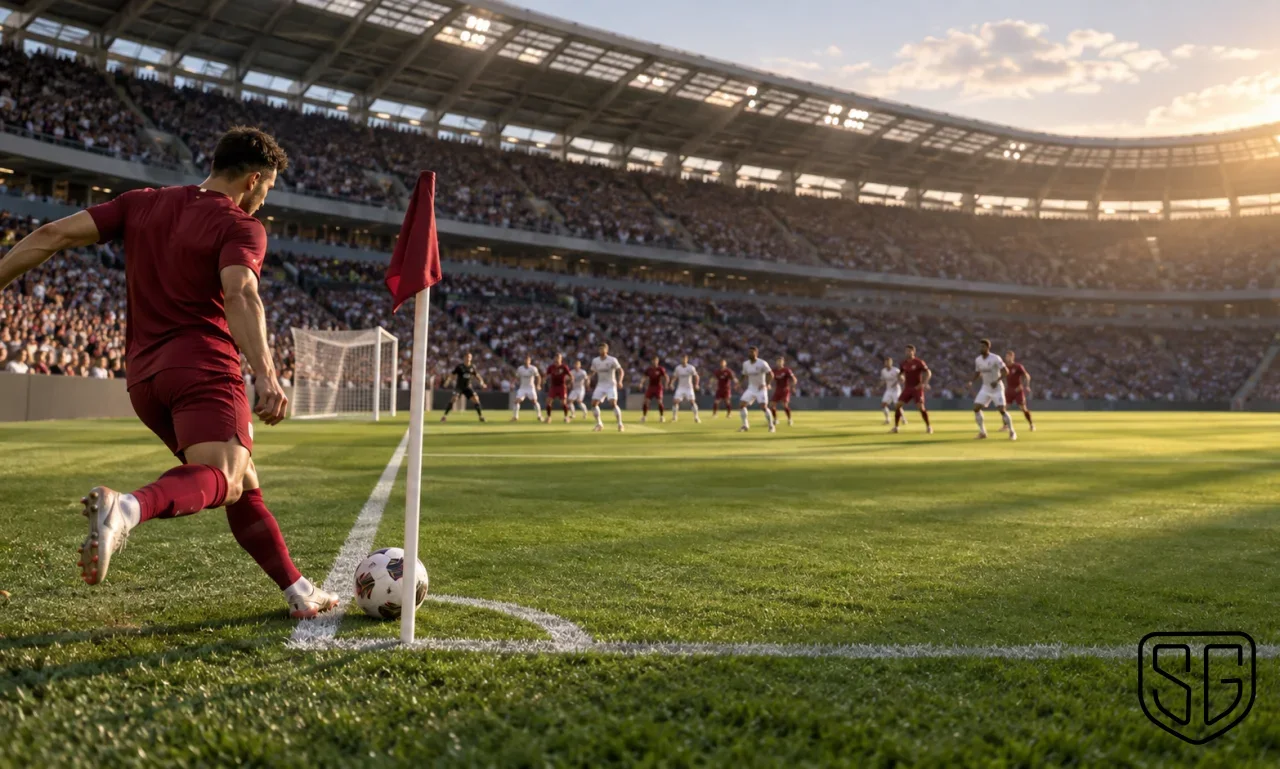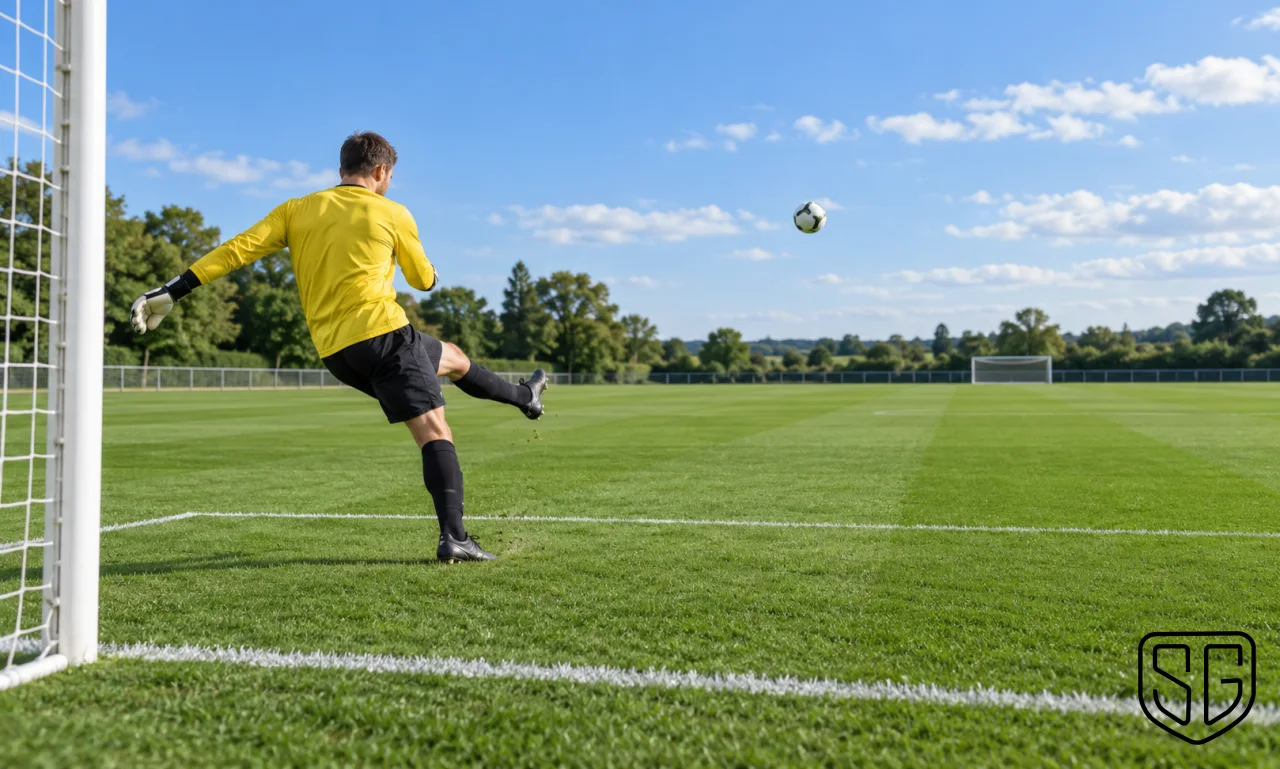
Yes. A goalkeeper can score directly from a goal kick, provided the ball enters the opponents' goal legally. No touch by a team-mate or defender is needed. IFAB Law 16 for 2026/27 expressly permits a direct goal against the opposing team. However, a goal kick that travels directly into the kicker's own goal produces a corner to the opponents, not an own goal.
The restart matters more than the position of the player taking it. A goal kick does not have to be taken by the goalkeeper: another player on the defending team may take it. The same direct-scoring rule applies. Calling every long kick by a goalkeeper a goal kick can therefore cause confusion, because open-play clearances and free kicks are different actions.
When the direct goal counts
Picture an illustrative long delivery from a goalkeeper's goal area. The ball is kicked, clearly moves, travels upfield and goes over the opposing goalkeeper into the net without another touch. The distance travelled and whether it bounced do not change the direct-scoring permission. The referee still has to confirm that the restart and goal were otherwise legal.
Law 10 defines a goal by the whole ball passing over the goal line between the posts and under the crossbar, with no offence by the scoring team. A ball that lands inside the goalmouth but has not completely crossed the line is not enough. Nor does a spectacular long kick excuse a separate offence elsewhere in the move.
How the goal kick must be taken
Under Law 16's procedure, the ball is stationary and kicked from anywhere within the goal area by a defending player. It is in play when kicked and clearly moving; it does not have to leave the penalty area first. Opponents must remain outside the penalty area until it is in play, subject to the law's provisions for opponents who have not had time to leave.
The taker cannot touch the ball again before another player has touched it. That restriction matters if a long attempt rebounds from a post all the way back to the kicker without a player intervening. The frame of the goal is not another player. A second touch would need its own decision; it is not automatically permitted because the first kick was aimed at goal.
What if it goes into the goalkeeper's own net?
A goal kick going directly into the taker's own goal results in a corner kick to the opposing team. For example, a strong gust could blow a kicked, moving ball back towards the goal. If no player touches it before it enters that goal, Law 16's own-goal exception applies. This is different from assuming every ball crossing a team's goal line must count against them.
An intervening touch changes the description of the incident. Once someone else touches the delivery, it is no longer entering directly from the goal kick. The referee then considers the subsequent play and any offence. When watching a disputed incident, identify even a small contact before applying the direct-own-goal exception.
Goal kicks, kicks from the hands and throws
A goalkeeper's kick from the hands during open play is not a goal kick restart. If it legally travels into the opponents' goal, a goal can still count, but under the ordinary scoring rules. A throw is different: Law 10 states that a goalkeeper throwing directly into the opponents' goal produces a goal kick. That distinction is why saying a goalkeeper can score with any distribution would be inaccurate.
Free kicks also have different rules. A goal may be scored directly against the opponents from a direct free kick; an indirect free kick needs another player's touch, as Law 13 explains. First identify the restart, then ask whether another player touched the ball. This is more reliable than judging only the final flight into the net.
Can a forward wait beyond the defenders?
Law 11 exempts a player receiving directly from a goal kick from offside. That can create an attacking option even when the goalkeeper is not attempting to score. SportsGround's goal-kick offside guide explains the exception. It ends being a direct reception once a team-mate plays the ball again, so the next phase must be assessed normally rather than treating the whole attack as exempt.