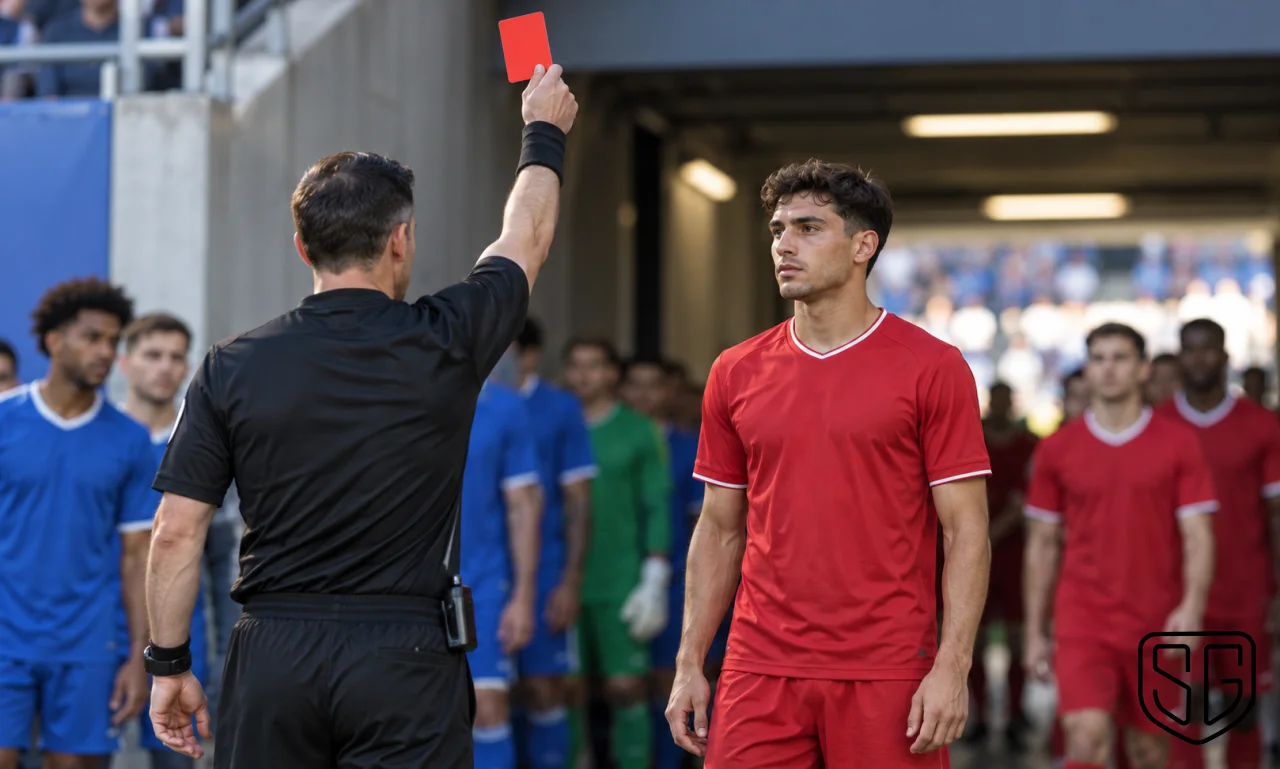
If both teams have too many players on the pitch, the referee must identify and deal with each extra person. The two sides do not cancel out each other's infringement. IFAB Law 3 limits each team to eleven players, including a goalkeeper, and sets out the procedure for substitutes and other people who enter without authorisation.
There is no single automatic restart for every situation involving two extra players. The referee needs to establish whether the ball was live, who entered, whether they interfered and whether a goal was scored. A substitute briefly standing over the touchline during a celebration is different from somebody joining a passing move as a twelfth player.
First check whether the substitutions were completed
A substitution is completed when the substitute enters according to the required procedure. Before that, the person waiting to come on remains a substitute. An outgoing player still inside the boundary and an incoming player entering too soon can therefore create a problem even when the coach intended a simple one-for-one change.
Imagine a hypothetical double substitution at a busy touchline. Each team sends somebody on before its outgoing player has left. The officials cannot accept twelve against twelve as a temporary arrangement simply because the numbers are equal. They must establish the authorised players and apply the substitution procedure, using the assistant referee or fourth official where appropriate.
Does play stop immediately?
For the extra-person situations covered by Law 3, interference determines whether play needs to stop. If a substitute enters and intercepts a pass, the involvement is clear. If somebody stands just inside the boundary far away from play, the referee may allow the current action to continue and arrange removal when play next stops.
This is why counting shirts in a freeze-frame is only the beginning of the analysis. The camera may include a player leaving after treatment or someone crossing the boundary as part of ordinary movement. A useful review follows the people through the sequence and checks permission, rather than assuming every visible person is participating illegally.
How is the restart chosen?
Interference by a substitute or another team-related extra person can produce a direct free kick or penalty under Law 3. An outside agent is treated differently. If both teams have an extra person, the referee still judges the actual interference and any other offences; the mere equality of numbers does not establish a dropped ball.
Where offences occur simultaneously, Law 5 requires the referee to assess the more serious offence, considering the sanction, restart, physical severity and tactical effect. That is a decision based on the incident, not an instruction to award two competing free kicks. Different misconduct can still require disciplinary action against different people.
Can a goal still count?
Yes. IFAB's official questions and answers include substitutes from both teams standing a few metres onto the pitch when a goal is scored without interfering. The goal is allowed in that example. It demonstrates why an extra person's presence alone must not be confused with involvement that affects the scoring move.
By contrast, an attacking substitute stepping onto the pitch to block a defender can affect the goal even without touching the ball. Our substitute interference guide covers related examples. Referees also need to know whether the problem was discovered before the next restart, because Law 3 has specific provisions for that timing.
Are cards and restarts the same decision?
No. Law 12 provides the disciplinary framework. The referee can sanction misconduct while separately deciding how play should restart. An extra player is not automatically sent off simply because their team briefly has twelve people on the grass; unauthorised entry, interference and more serious conduct have to be assessed accurately.
There is also a narrow current-law exception involving a team-related person who touches a ball that is clearly leaving the field without intending unfair interference. Law 9 covers that specific situation. It should not be generalised into permission for substitutes to take part. The nature and effect of the contact remain essential facts.
What should spectators look for?
Check the substitution sequence, the ball's status, the extra person's role and the effect on play. Then separate the goal decision, restart and discipline. Equal numbers of extra people do not make the situation legal, but they do not automatically invalidate everything that follows either. These hypothetical examples explain IFAB's current rules checked on 21 October 2026; they do not describe a particular match.