No. A player cannot score an own goal directly from a free kick. If a properly taken direct or indirect free kick goes into the taker's own goal without touching another player, the opponents receive a corner. IFAB Law 13 states this exception expressly. The fact that the kick was described as direct does not make a direct own goal possible.
This is a small rule with a large practical consequence. A pass back towards a goalkeeper can end with the ball in the net and still produce no goal. However, a touch by the goalkeeper or another player can change that outcome. The referee must establish the sequence rather than use the ball's final position as the only evidence.
Why does a direct free kick not mean either goal?
The word direct describes permission to score in the opponents' goal without an intervening touch. It does not grant the same permission at the other end. An indirect free kick needs another player's contact before a goal can be scored against the opposition. Both varieties share the rule preventing the taker from sending the restart directly into their own net.
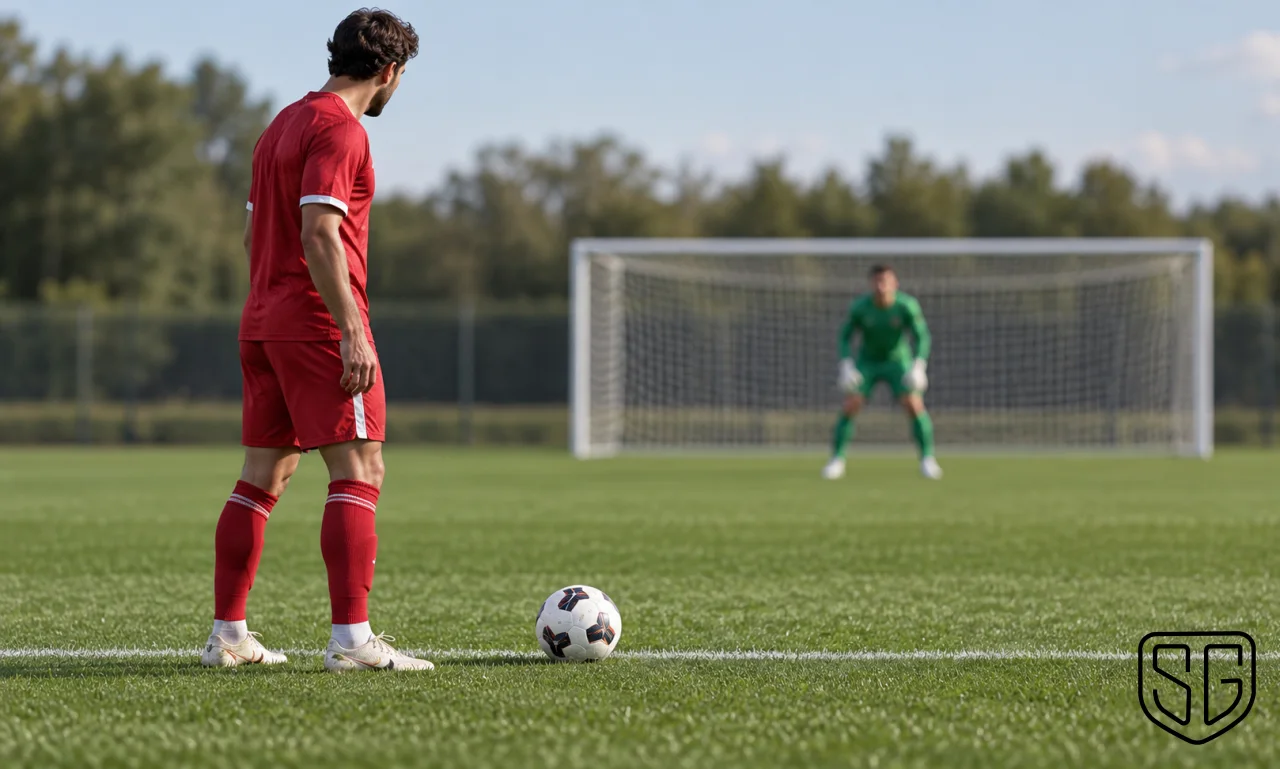
Picture an illustrative free kick awarded to a defender near halfway. The defender passes backwards, believing the goalkeeper is waiting centrally. Instead, the goalkeeper has moved sideways and the untouched ball crosses the goal line between the posts. Assuming the restart was otherwise correct, the decision is a corner to the opposition, even if everybody initially reacts as though a goal has been scored.
What if the goalkeeper gets a touch?
If another player touches the ball before it enters the goal, it is no longer entering directly from the free kick. Law 13's official examples include a goalkeeper making contact with an inaccurate pass but failing to keep it out. A goal is then awarded if no other offence changes the decision. A slight touch can therefore be decisive.
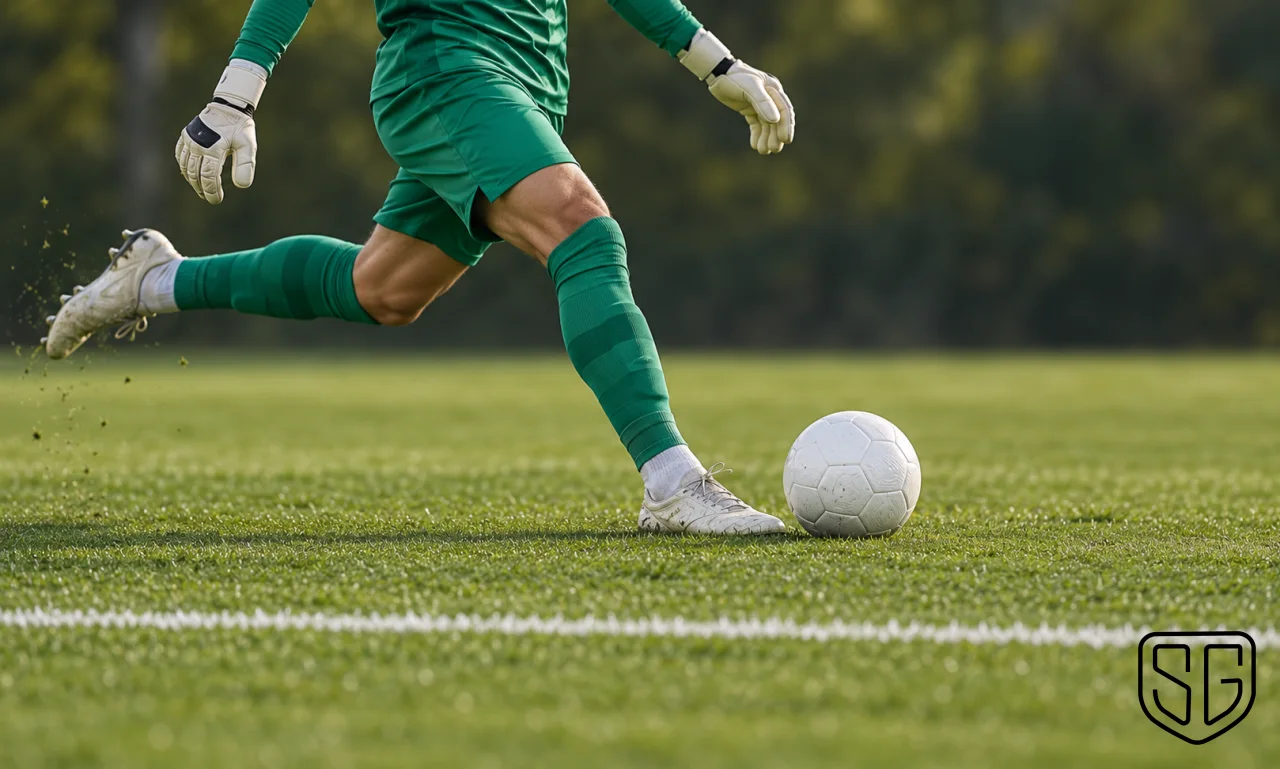
For viewers, that creates an important distinction between a missed clearance and an unsuccessful clearance. A goalkeeper who swings a boot without contact has not changed the direct nature of the kick. A goalkeeper who clips the ball has. Camera perspective and the player's reaction may help locate a possible touch, but neither should be treated as proof on its own.
Do bounces and the goal frame count?
The relevant interruption is another player's touch. A bounce on the grass or contact with a post does not by itself supply one. In an illustrative windy match, a free kick could travel backwards, strike the frame and enter the taker's goal while remaining untouched by anyone else. The direct-own-goal exception still needs to be considered.
Law 10 defines when a goal is scored, but its general goal-line test operates alongside specific restart restrictions. That is why 'the whole ball crossed the line' is only part of the answer. Referees first need a valid scoring sequence, not simply a clear view that the ball has finished beyond the line.
What if the taker touches it twice?
A restart taker cannot touch the ball again before another player does. IFAB's free-kick questions and answers deal with a player taking a second kick and sending the ball into their own net: the correct restart is an indirect free kick for the opposition from the second-touch position. It is not a way of converting the situation into a legitimate own goal.
This matters when a defender tries to repair a weak first pass. A rushed follow-up can create an additional offence before the ball reaches goal. Law 12 also makes the effect on a promising attack or obvious goal-scoring opportunity relevant to discipline. Spectators should watch the first and second contacts rather than judging only the final mishit.
How does this compare with other restarts?
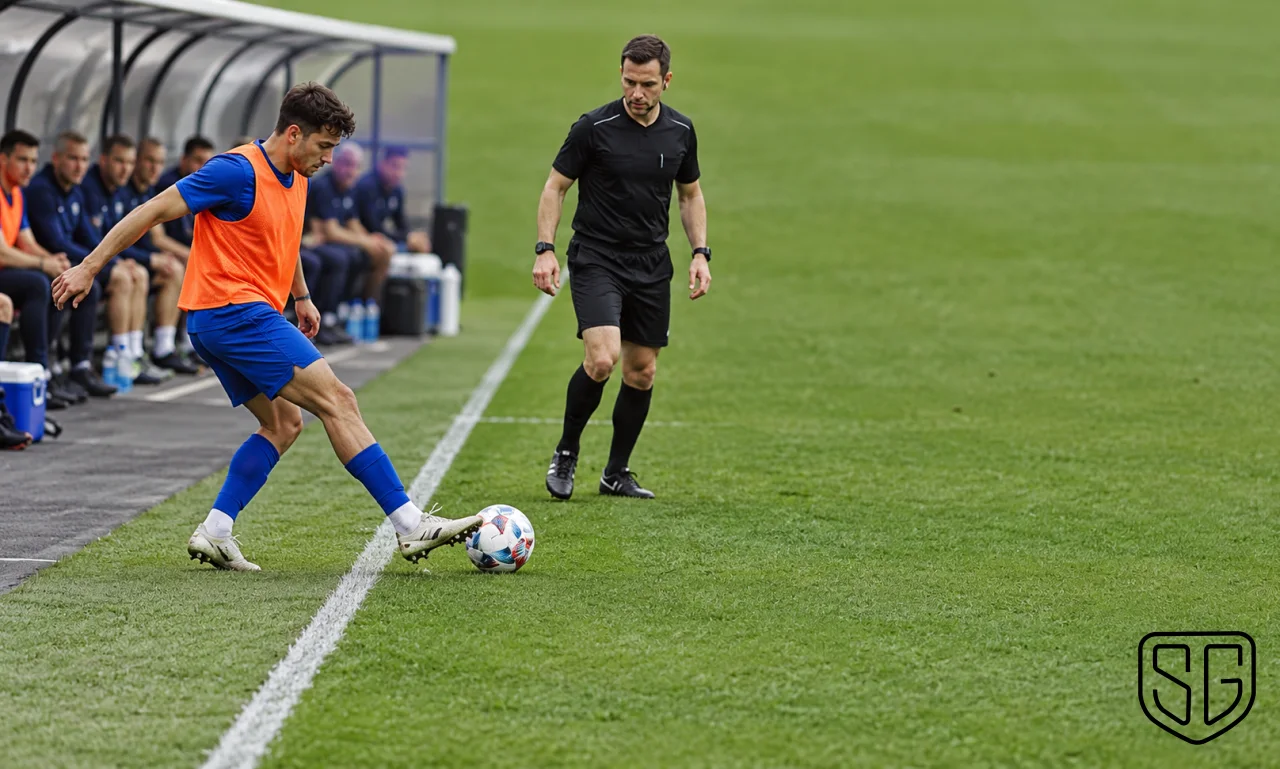
SportsGround's throw-in scoring explanation describes another restart that cannot produce a direct own goal. A goal kick also has a specific scoring provision under Law 16. These similarities are useful memory aids, but every restart should still be checked under its own law rather than assumed to behave identically.
The simplest viewing sequence is to confirm that a free kick was awarded, check whether it was taken correctly, and identify every player's contact before the ball entered the net. An untouched kick into the taker's own goal produces a corner; another player's touch can allow a goal; a second touch by the taker raises a separate infringement. This guide uses hypothetical examples and the current IFAB provisions checked on 20 October 2026.