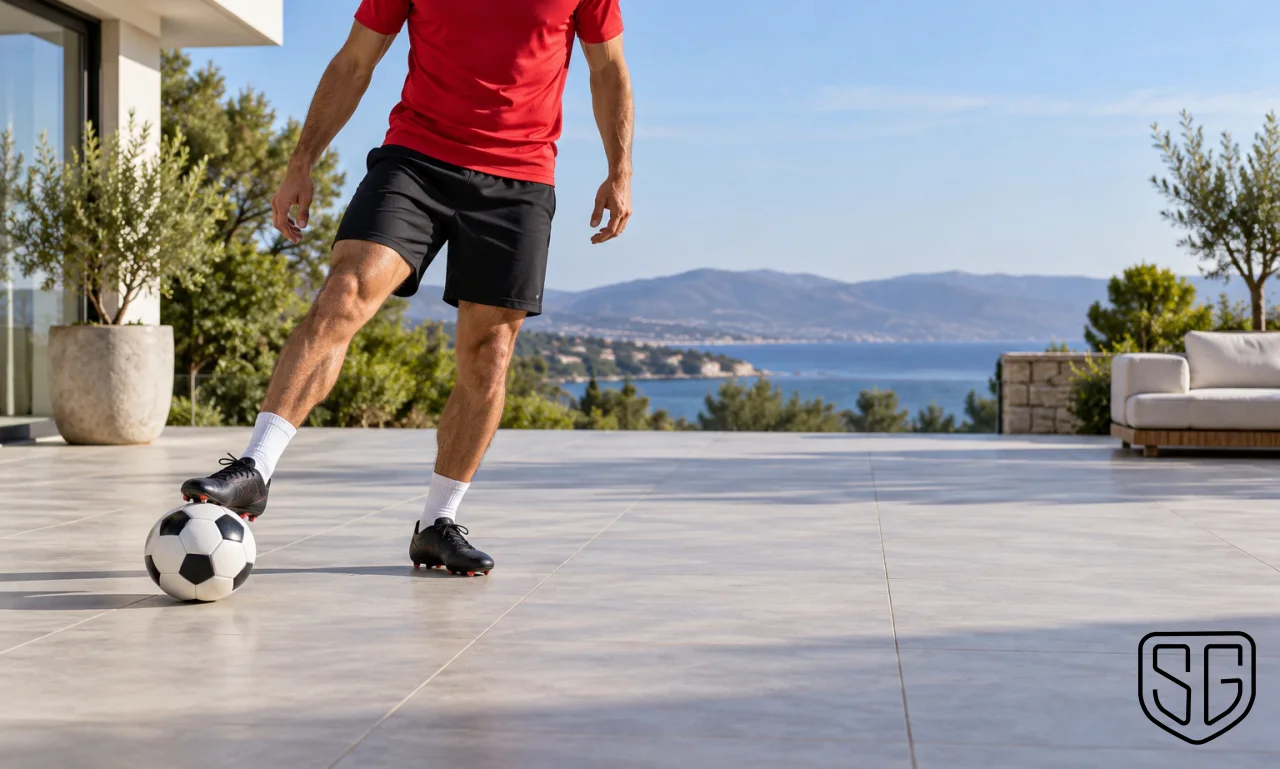
You can practise football without a goal by giving each action a clear destination and a measurable outcome. A painted line, a permitted chalk mark or a safe patch of grass can replace a scoring target for controlled passing. The useful question becomes whether you delivered the ball where you intended, rather than whether it reached a net.
This guide provides an original suggested practice plan, not an official coaching programme. It concentrates on accuracy, receiving and movement rather than powerful shooting. If you have no safe place for a travelling ball, choose close-control work instead. A smaller challenge completed carefully is more useful than a spectacular strike that endangers somebody nearby.
Define a target that does not need a structure
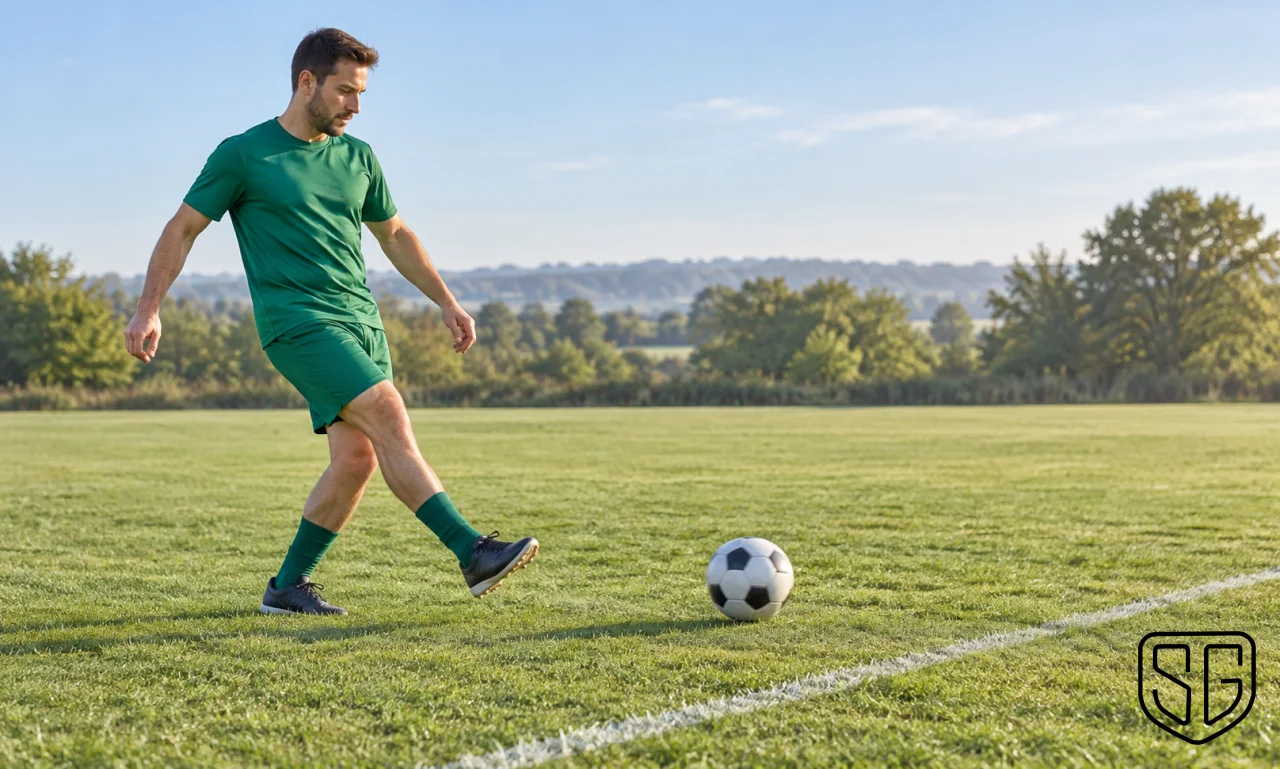
Choose a level, clear area where football is permitted. Identify a short existing ground line and imagine a narrow crossing point along it. Start close enough to send a gentle pass across that point without chasing the ball into a road, footpath or neighbouring property. Leave ample space beyond the target for the ball to stop.
A target on the ground tests direction differently from a goalmouth. You are not practising shooting height or finishing past a goalkeeper. Keep that distinction in your notes. Do not use glass, doors, parked vehicles or another person's belongings as improvised targets, and obtain permission before making any temporary ground marking.
Use a passing challenge before adding power
Place the ball at your starting point, look towards the crossing point and play a controlled inside-foot pass. Walk after the ball, bring it back and repeat. Try five attempts, counting only those that cross the chosen point at a manageable pace. These numbers are an example, not a standard you must achieve.
England Football Learning explains several passing techniques and the importance of the receiving situation. Here, deliberately begin with one straightforward contact rather than switching technique after every miss. If the ball repeatedly finishes to one side, adjust your starting position and contact gently. Do not assume that hitting harder will correct the direction.
Create a receiving task without a partner
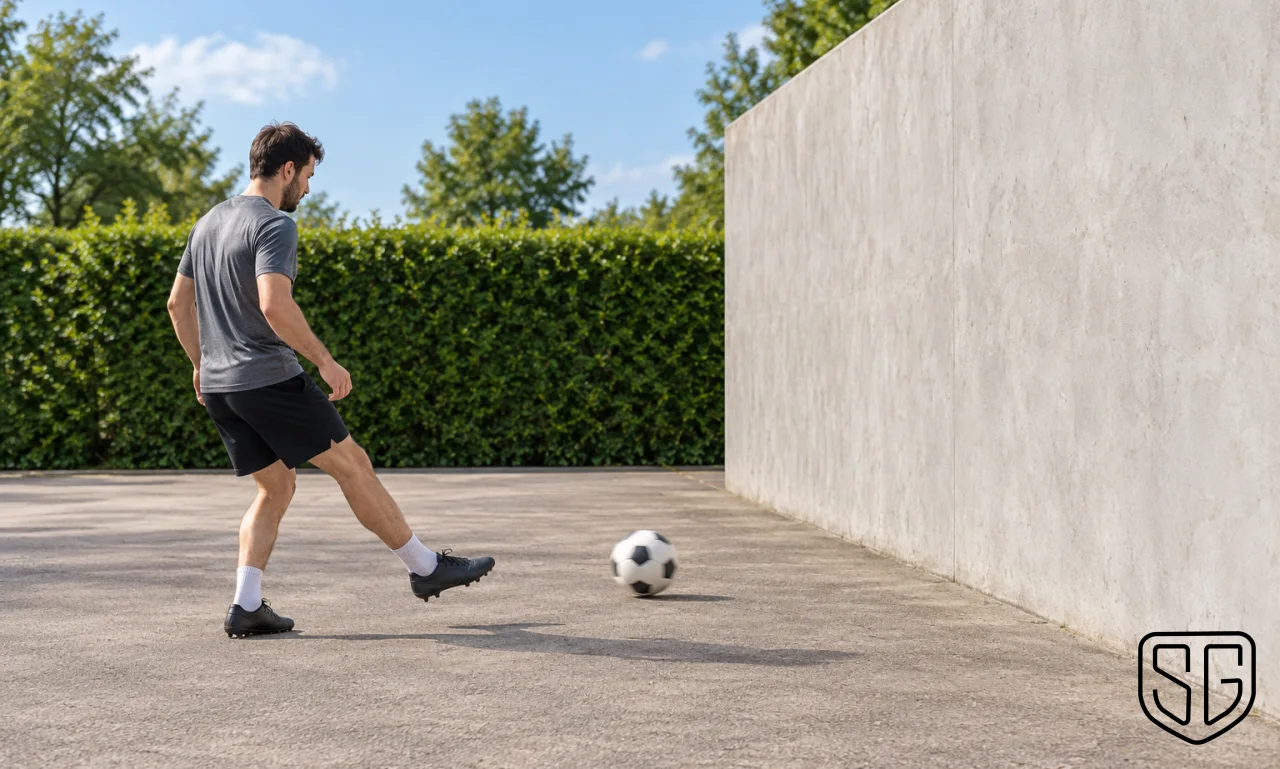
If a suitable outdoor rebound wall is available and its owner permits use, make a soft pass and control the return inside a generous imaginary receiving area. Use a quiet surface without windows, pedestrians or unpredictable obstacles. Begin with a stop, then try directing the first touch towards a safe next action.
Without a wall, roll the ball gently ahead and move to control it before it crosses a nearby ground line. This is a different exercise, not a substitute for a team-mate's pass. Our first-touch guide offers further receiving ideas. Keep the ball slow enough that your movement remains balanced.
Add an exit rather than an imaginary score
After controlling the ball, turn into a second clear patch and make the next gentle pass. Decide the exit before the first attempt, then change it between rounds. This links receiving with repositioning, while leaving you enough time to notice whether the first touch actually helped the following action.
A simple record has three columns: passes reaching the intended point, controlled receptions and turns completed without the ball escaping. Review the weakest element separately. A tidy final pass should not hide an uncontrolled first touch, and a single accurate attempt should not be mistaken for dependable technique across a whole session.
Know when a real goal still matters
Ground-target practice cannot reproduce finishing angles, goal height, goalkeeper movement or pressure from defenders. The FA practice spectrum distinguishes isolated technique work from applying skills in realistic football situations. Use this session to explore contact and direction, then practise finishing in an appropriate coached setting when a safe goal becomes available.
Progress by changing one condition: a slightly longer pass, a smaller receiving area or an exit on the other side. Retest under the original conditions before claiming improvement. Stop when concentration or control deteriorates. The absence of a net need not prevent a purposeful session, but it should shape what you choose to practise and what you can reasonably measure.