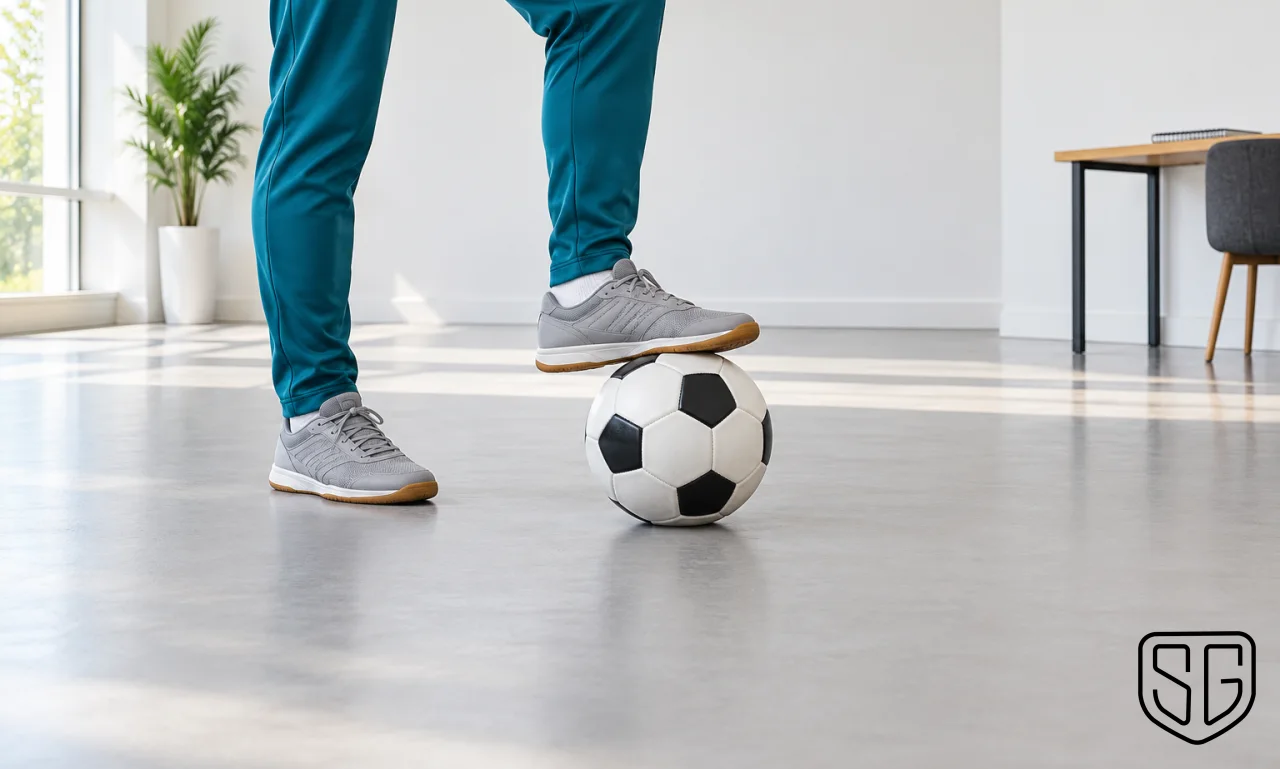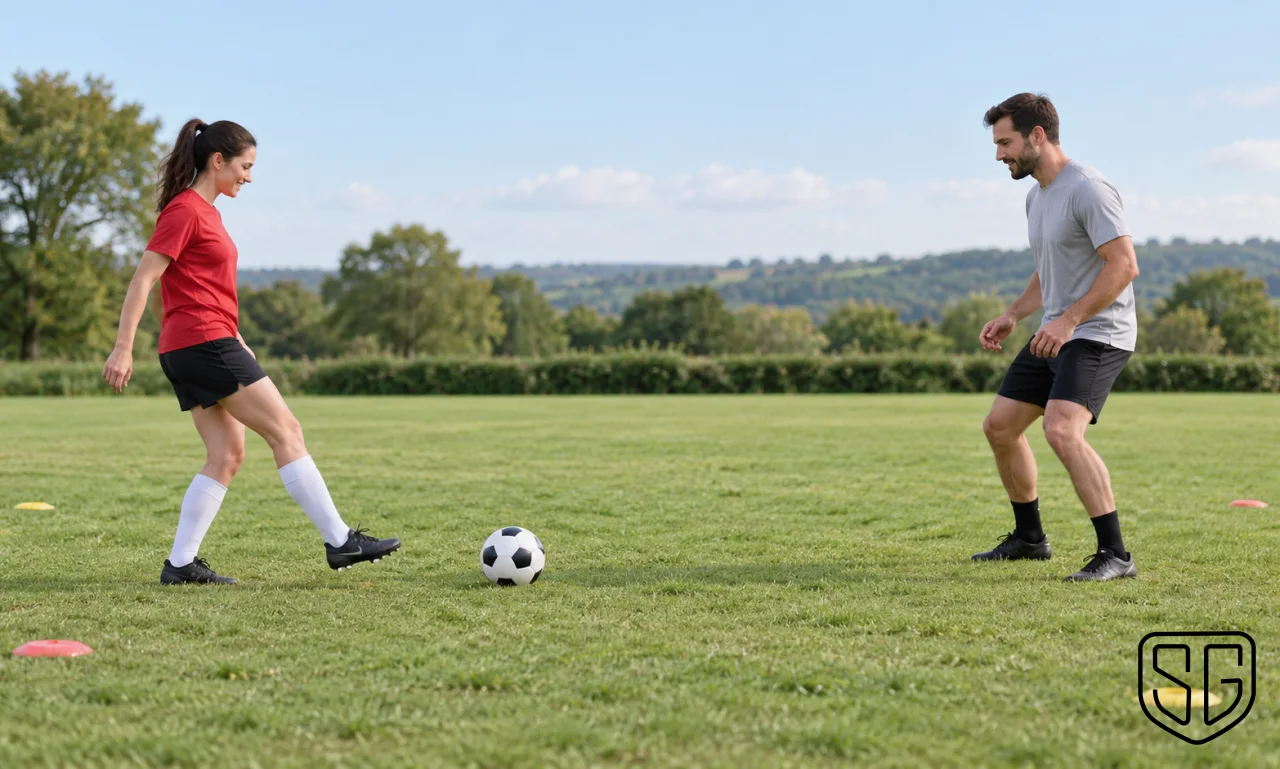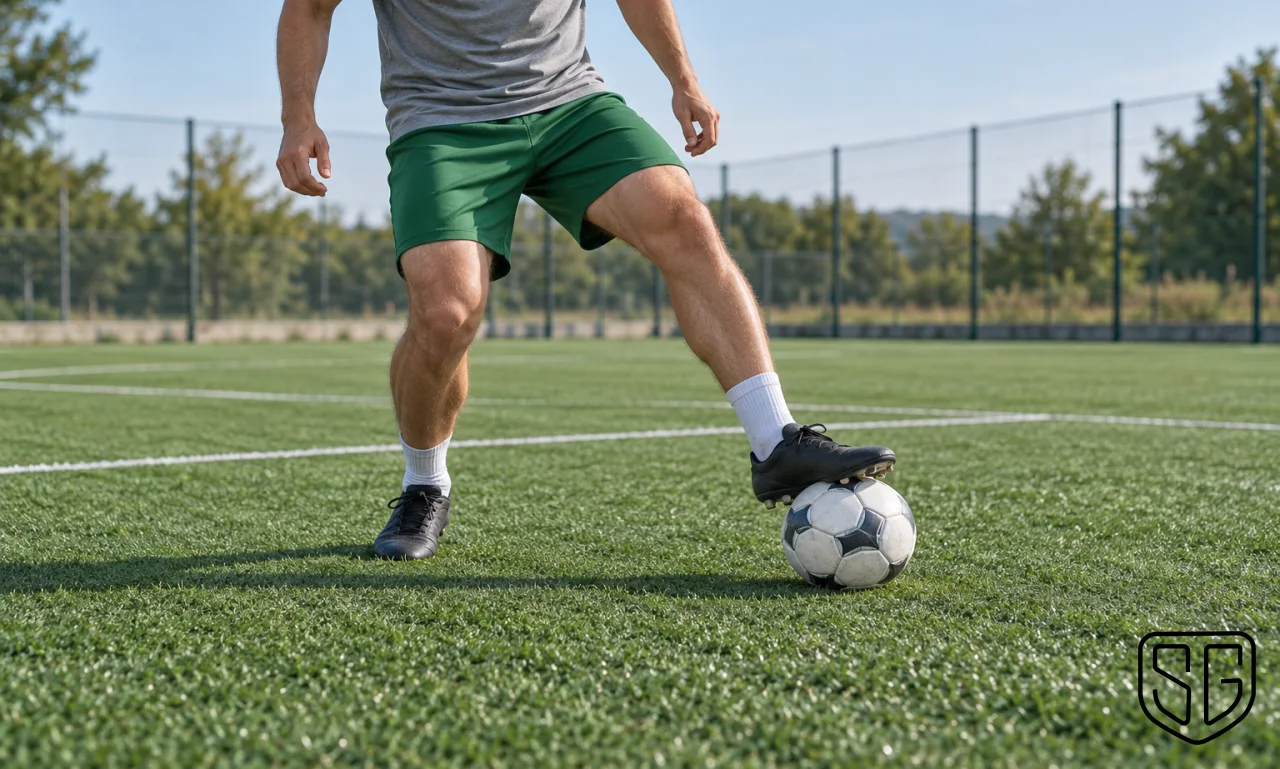
Close ball control in tight spaces is about keeping the next action available. The ball needs to remain reachable, but trapping it under your feet after every contact can make moving away awkward. Begin with enough room to stay balanced, then explore how your touches change when the usable area becomes smaller.
The practices here are original suggestions for a beginner, not a prescribed FA session. Use a level, clear, permitted surface and footwear suited to it. Tight space must not mean practising beside glass, furniture, traffic or other people. Leave room beyond the intended route for an ordinary mistake.
Find your comfortable control distance
Walk slowly with the ball and stop wherever you can settle it without lunging. Repeat using each foot. Notice the distance between the ball and your next step rather than trying to reproduce somebody else's exact stride. If the ball consistently requires an extra chase, shorten the push or slow your approach.
Try five gentle changes of direction and count how many leave the ball available for another touch. This is a suggested baseline, not a universal test or target. Keep the same surface and approximate pace when repeating it. A count becomes useful only when you know what successful control looked like.
Explore contacts before adding speed
Move the ball gently across your body with the sole, release it and settle it with the other foot. Next, try a small inside-foot push followed by an outside-foot correction. Pause between attempts. The point is to feel how different contacts alter the ball's route, not to perform a continuous sequence at maximum speed.
The FA's ball-mastery resource, published in August 2023, encourages varied ball contact and exploration for young players. The suggested tasks here borrow that principle without treating the resource as an adult workload prescription. Keep your attention on a controllable ball and comfortable movement rather than a compulsory number of touches.
Create a turning area, not a trap
Choose a broad patch of clear ground as your turning area. Approach slowly, draw the ball back gently and leave along the route you came from. Repeat towards the other side. You do not need to drag the ball a long way or rotate sharply to make the task worthwhile.
If you repeatedly step over the ball or finish facing away from the exit, pause and separate the actions: arrive, move the ball, reposition, leave. Reconnect them gradually. Our guide to turning with the ball develops this part in more detail. Keep this session focused on staying in control within your available space.
Add an exit choice
Once the movement is comfortable, identify two safe exit directions. A willing partner can indicate one before you approach. Check the cue, return attention to the ball and choose that route. Begin with an early signal; a late instruction is not automatically a better exercise if it causes a hurried twist or collision.
Working alone, choose the exit before each attempt and alternate it. This rehearses movement but does not test reading an opponent. The FA practice spectrum, dated March 2023, separates unopposed technique work from realistic game practice. A good solo sequence cannot establish that the same control will hold against a defender.
Reduce space carefully
Make one modest change at a time. You might bring the turning point slightly closer while keeping the pace unchanged. Alternatively, keep the area and use the less familiar foot more often. Do not narrow the space, increase speed and add a new movement together; that makes it hard to identify why the ball escapes.
If the exercise becomes a succession of emergency recoveries, enlarge the area again. Recovering occasionally is part of learning, but constantly rescuing an unreachable ball gives little opportunity to practise the intended contact. Avoid using walls or household objects as physical barriers that stop every error for you.
Review control, not a highlight move
Repeat the opening direction changes under similar conditions. Note clean exits, awkward extra steps and whether either foot needs a simpler approach. Compare with your own earlier attempts rather than a video of an experienced player. Progress can mean a calmer next step even when your overall pace has not increased.
Finish with one practical priority, such as keeping the ball available after a sole drag. Use suitable coached small-sided play when you want to test decisions against opposition. Close control is an option for protecting or moving possession, not a reason to dribble when a useful pass is already available.