The best football drills using only one ball are the ones you can organise safely and repeat with a clear purpose. You do not need to turn every session into an equipment circuit. A ball and a permitted clear area can support useful work on touch, travelling and turning, provided you understand what the exercise can and cannot test.
The five tasks below are original suggested practices, not a ranked scientific comparison or an official coaching programme. No cones, goal, rebound wall or additional equipment are required. Adapt the space and pace to your circumstances. Stop if the surface, footwear or surroundings make ordinary missed touches unsafe.
1. Roll, release and recover
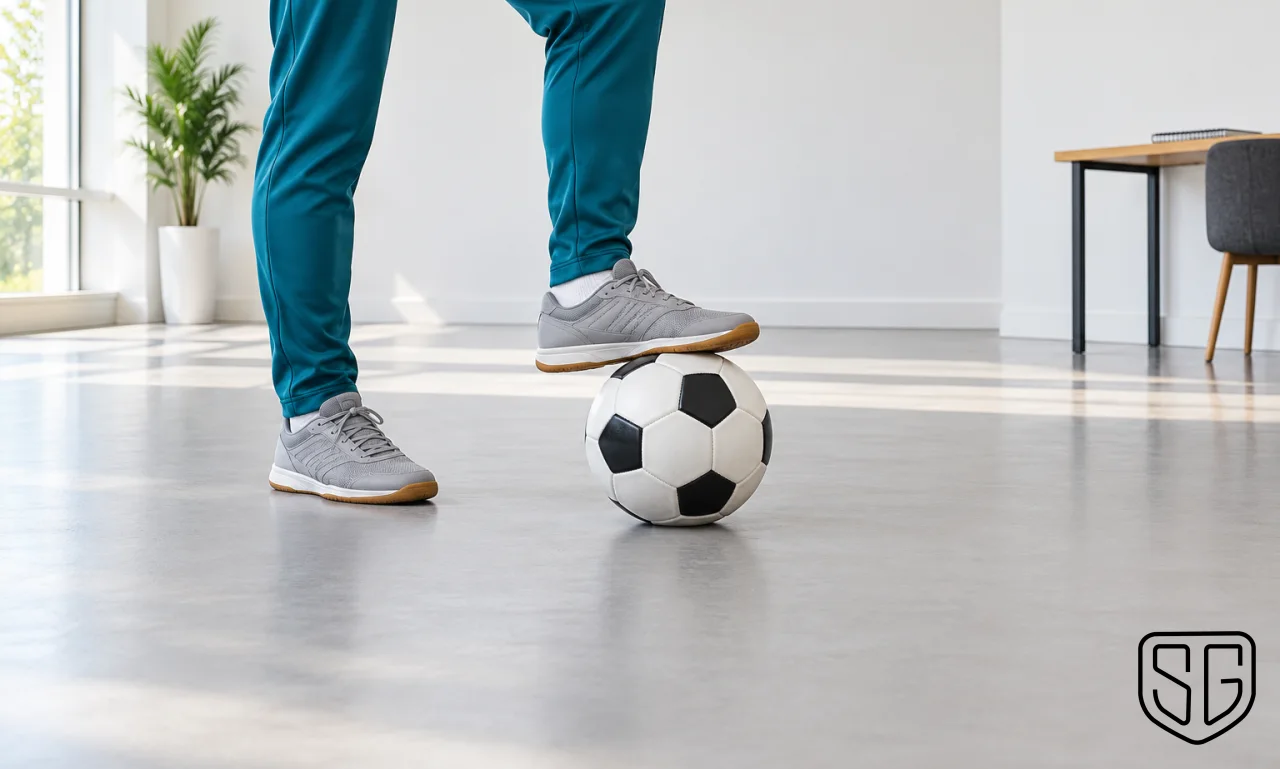
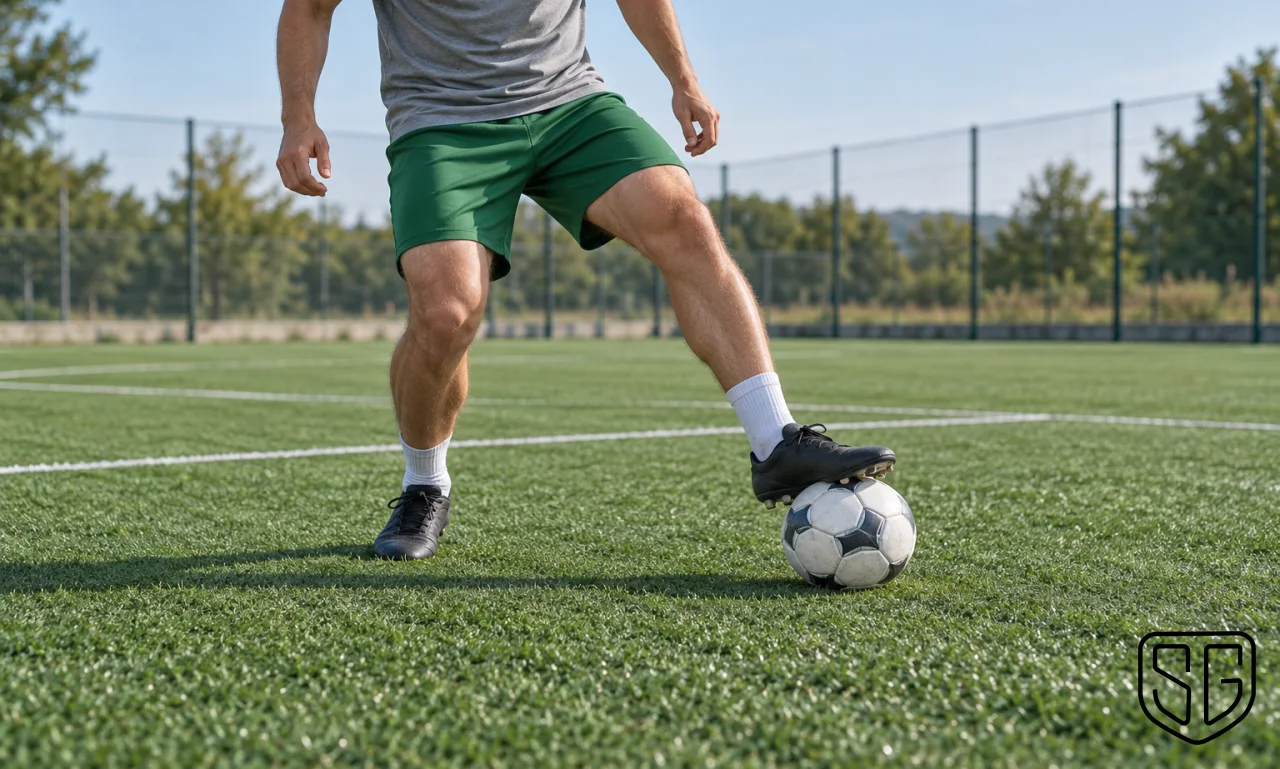
Place one foot gently on the ball, roll it a short distance across your body and release it. Settle it with the other foot before beginning again. Keep your movement unhurried and allow a pause between rolls. You are exploring direction and contact, not trying to balance your full weight on the ball.
Make it easier by moving the ball less far and resetting fully. Progress by linking two controlled rolls, then checking that you can still stop comfortably. The FA's August 2023 ball-mastery guidance supports varied contact and experimentation. This exercise is one suggested way to explore that idea, not a required sequence from the source.
2. Travel and settle
Choose two points in a clear area using existing pitch markings or visual references that are outside your walking route. Move slowly from one to the other, settle the ball, then return. Choose a distance that allows more than a single touch without requiring a sprint or a sharp stop.
Watch whether the final contact leaves you balanced. To simplify, slow down or shorten the journey. To progress, deliberately use the other foot for the final touch. Avoid turning this into a race: arriving sooner does not help if the ball needs a long chase after the intended stopping point.
3. Draw back and leave
Approach the ball at a walk, draw it back gently with the sole and guide it along a clear return route. Reposition your feet as needed. Repeat on the opposite side. The aim is to connect a direction change with an exit, rather than finishing with the ball trapped behind your standing leg.
If the whole action feels confusing, practise it from a stationary start. Add movement only when you understand where the ball should finish. Our turning practice guide offers a fuller progression. Keeping a session to one familiar turn can be more useful than collecting several unreliable tricks.
4. Gentle self-delivery and receive
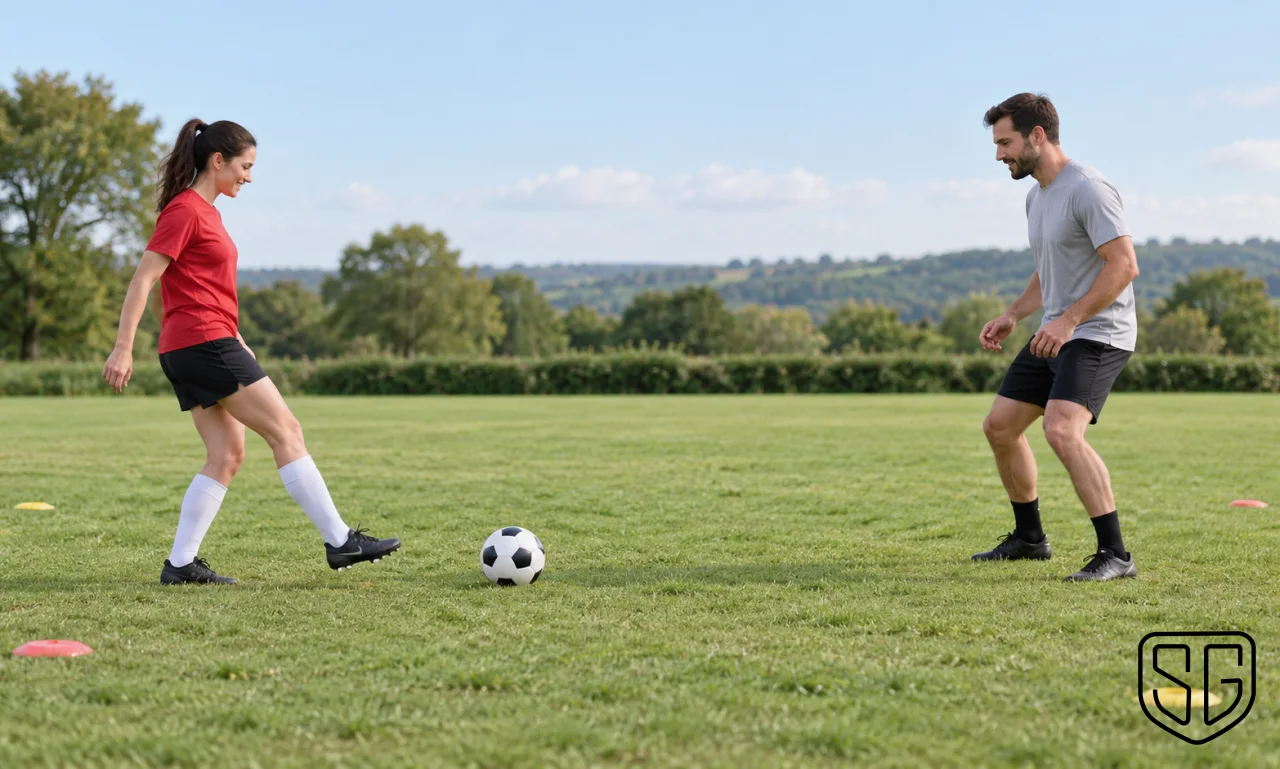
Use your hands to roll the ball gently a short distance into clear space, then walk to meet it and receive with your foot. Do not throw it into the air or chase it towards a wall. This creates a manageable moving ball without requiring a partner, a rebound surface or a hard pass.
Try receiving towards a broad safe area beside you, then making another controlled touch. Mirror the task for the other foot. The FA's March 2022 passing guidance discusses receiving within effective passing. This self-delivery is a limited practice aid: it does not reproduce a teammate's timing, angle or changing intentions.
5. Link a short sequence
Combine a gentle self-delivery, reception, short travelling movement and turn. Finish by settling the ball. Keep the sequence short enough that you can identify which part breaks down. If the reception is the problem, remove the turn temporarily rather than repeating the whole chain without understanding the error.
Once you can repeat the sequence calmly, change a single feature, such as the receiving direction. Do not add airborne tricks just to make the drill harder. The sequence should help you connect familiar actions, not create pressure to keep moving after control has disappeared.
Choose a session and an honest review
Select two tasks that address your current difficulty and leave time to review them. Record one observation for each: perhaps the ball stays reachable on the right but travels too far on the left. Our solo ball-control guide can help you organise a more focused session.
One ball is enough for technical practice, but no solo routine tests everything. The FA practice spectrum distinguishes isolated technique from realistic football situations. When suitable opportunities are available, combine solo work with coached or small-sided play. Judge these drills by the useful practice they provide, not a promise that repeating them guarantees match performance.