Turning with the ball is useful when your current route closes or a better option appears elsewhere. The purpose is to change direction while keeping possession available, not to perform a named trick at any cost. Begin with a simple turn you can control, then connect it to looking, moving and choosing an exit.
This guide offers original suggested exercises rather than an official coaching plan. Use level clear ground, suitable footwear and room to stop safely. Start at walking pace without an opponent. If you are teaching children or introducing contested activity, use appropriate supervision and adjust the task to the participants rather than demanding a fixed level.
Make the exit clear before adding a turn
Choose a start point, a broad turning area and a safe return route. Walk the ball into the area, stop comfortably and move back towards the start. That first task establishes where you intend to go. Do not put bottles, loose clothing or other trip hazards at the exact point where your feet need to move.
Notice the difference between turning your body and taking the ball with you. If you rotate but leave possession behind, slow down and examine the final contact. A useful turn finishes with the ball in reach along the new route, not simply with your shoulders facing the opposite way.
Explore a gentle sole drag
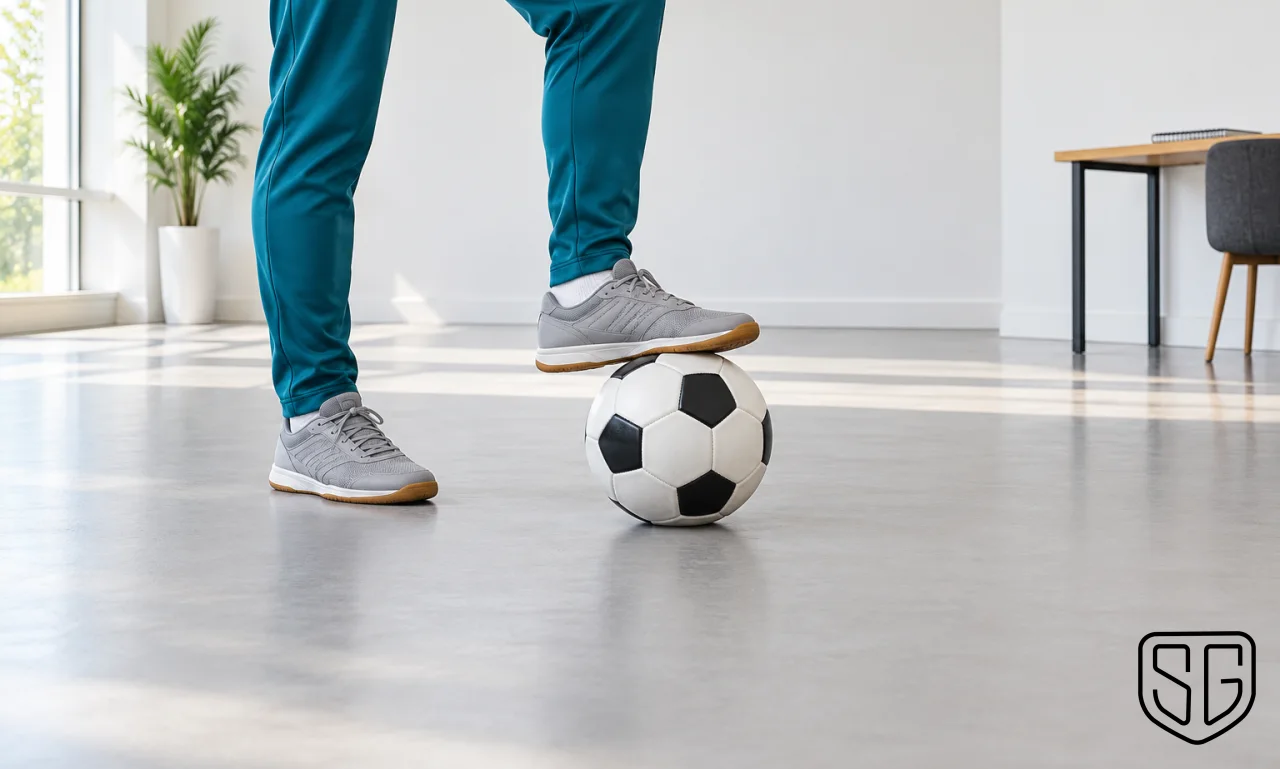
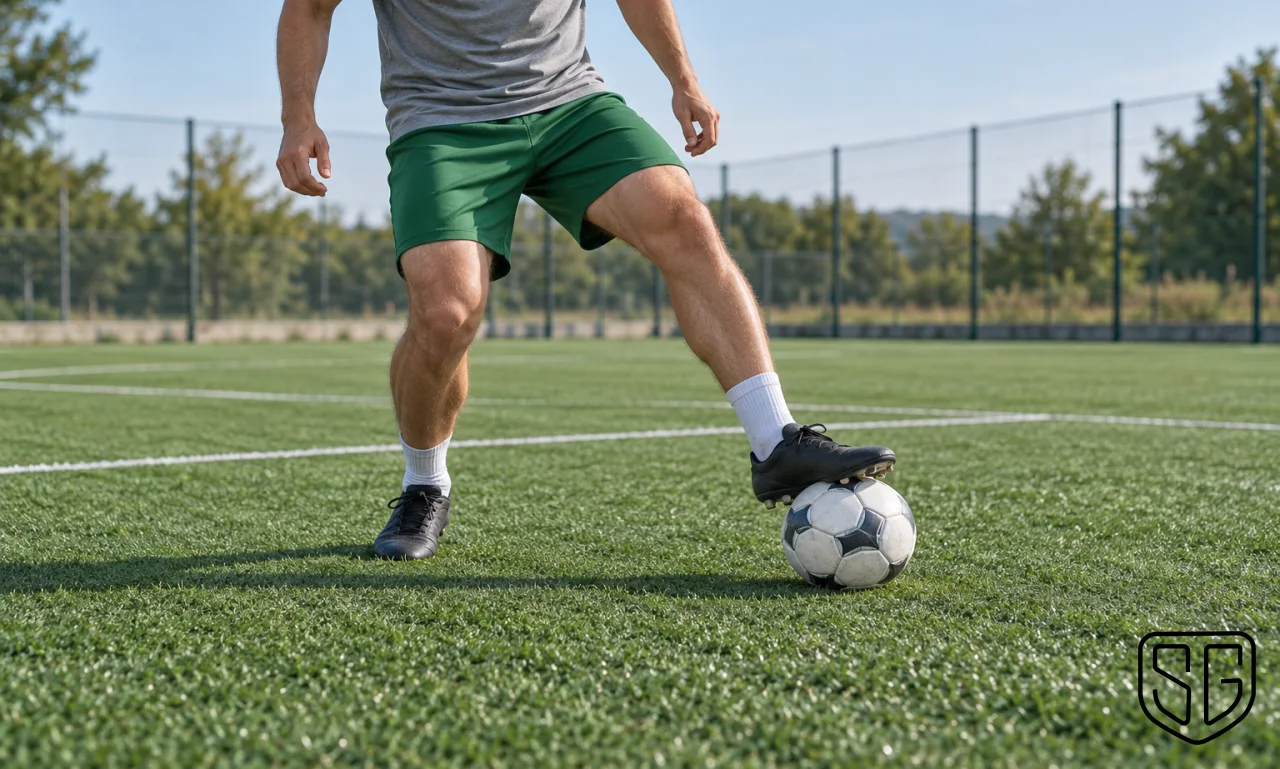
With the ball almost stationary, place the sole lightly on top and draw it back a comfortable distance. Step around so you can follow the ball into the clear exit. Begin with a small movement rather than pulling hard. Keep your weight supported and avoid leaning backwards beyond a stable stance.
Repeat on the other side. The two versions may feel different, so judge whether each leaves a manageable next touch. These are exploratory instructions, not a requirement to force a particular joint position. Stop a movement that causes discomfort, and ask a qualified coach for help if balance remains difficult.
Try an inside-foot change of direction
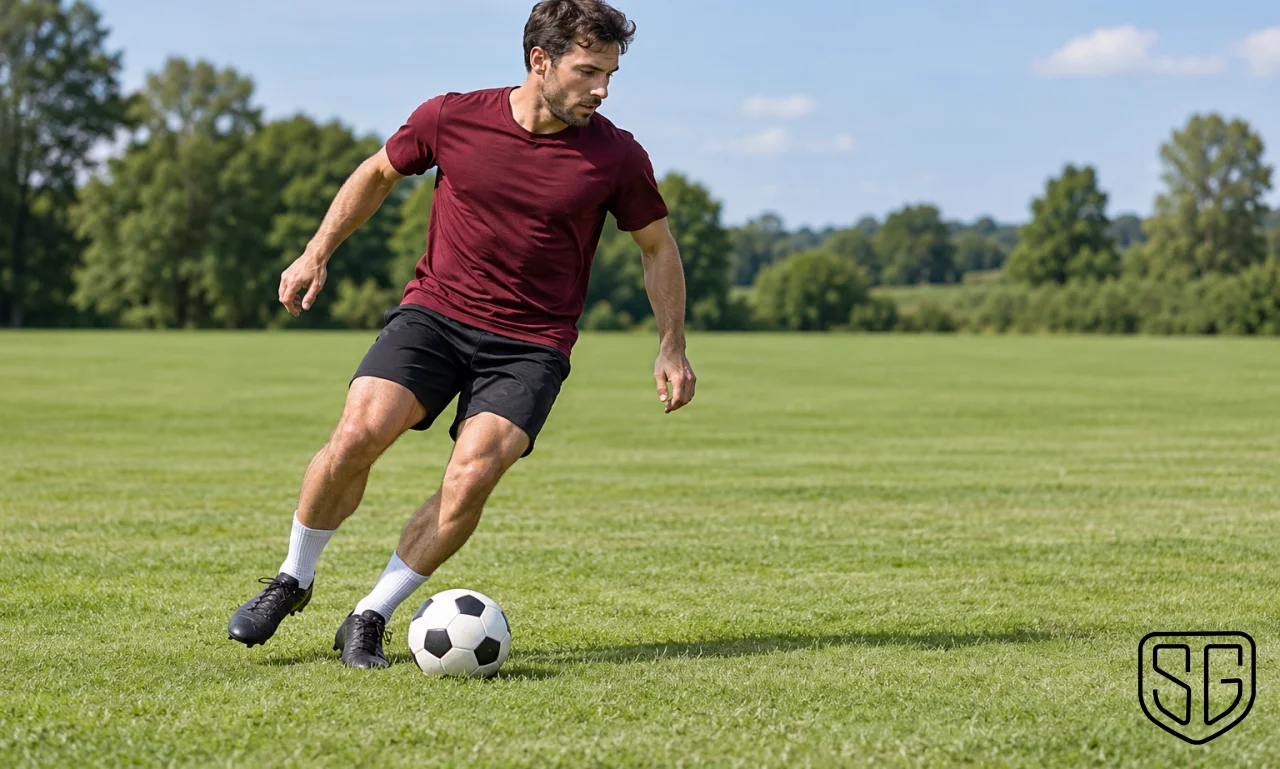
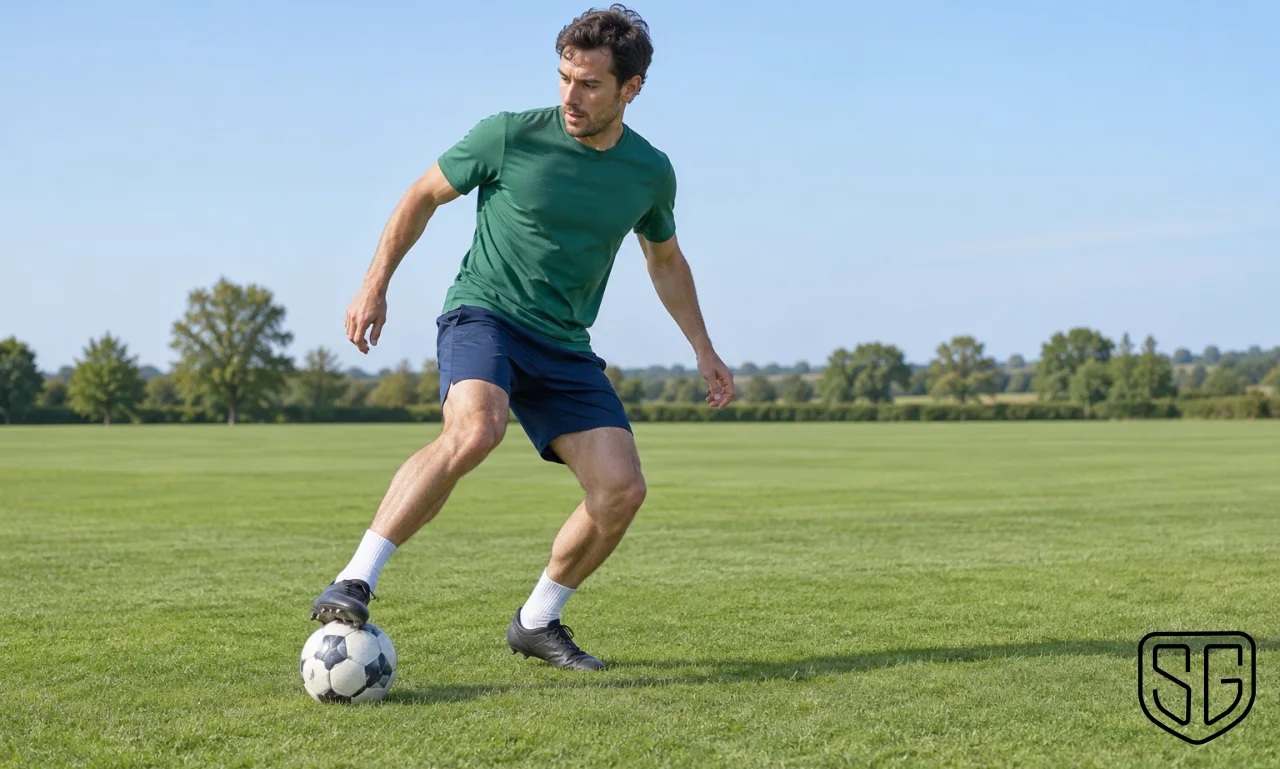
Walk forwards with gentle touches, then use the inside of a foot to guide the ball across your route into open space. Follow it with a controlled step. Start with a modest direction change before attempting a full reversal. You should be able to stop without chasing the ball beyond the practice area.
The FA resource on ball mastery for young players describes manipulating the ball in different directions and turning when options are restricted. That supports exploring varied contacts; it does not make one turn automatically correct. Choose the movement that fits the available space rather than treating the most elaborate version as the best.
Connect the turn to your next action
After changing direction, take one controlled travelling touch or make a gentle pass. Use our dribbling-without-cones guide to organise a clear route. Review the exit contact as closely as the turn itself. A sharp rotation that sends the next touch too far has not solved the whole task.
Try approaching from either side while keeping speed low. Record where the ball finishes, whether you remain balanced and whether the exit is clear. Change one feature at a time. Increasing speed, narrowing the area and demanding a different foot simultaneously can hide the actual reason a movement breaks down.
Introduce a reason to change direction
A partner can indicate which of two safe exit areas is open before you reach the turning zone. Look at the cue, check the ball and choose a route. Initially, the partner does not tackle or step suddenly into your path. This adds information without making the exercise a collision-avoidance challenge.
The FA practice spectrum explains why unopposed exercises and realistic games offer different learning opportunities. A prearranged signal is still simpler than an opponent's movement. Progress towards suitable small-sided play when ready, with a coach helping manage space and pressure rather than assuming solo repetitions establish match effectiveness.
Keep the turn available, not compulsory
Sometimes continuing forwards or passing is the sensible answer. The FA passing guidance includes scanning, timing and positioning as well as contact technique. For the same reason, practise recognising when an exit is blocked instead of turning automatically every time you reach a marker.
Finish by selecting one turn that remains controlled on both sides at a comfortable pace. Note the condition that makes it harder, such as an angled approach or a late cue. Revisit that condition next session. Useful progress means a more reliable option when the situation calls for it, not a longer list of moves performed without purpose.