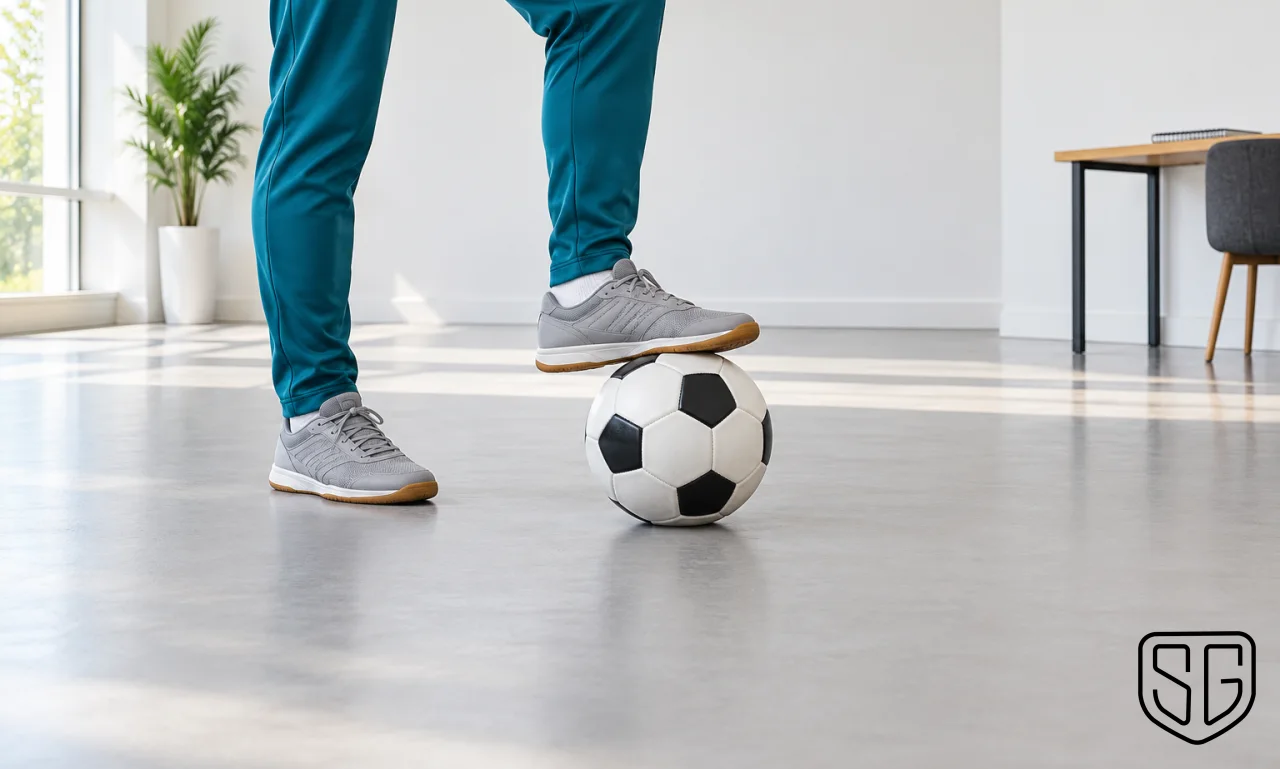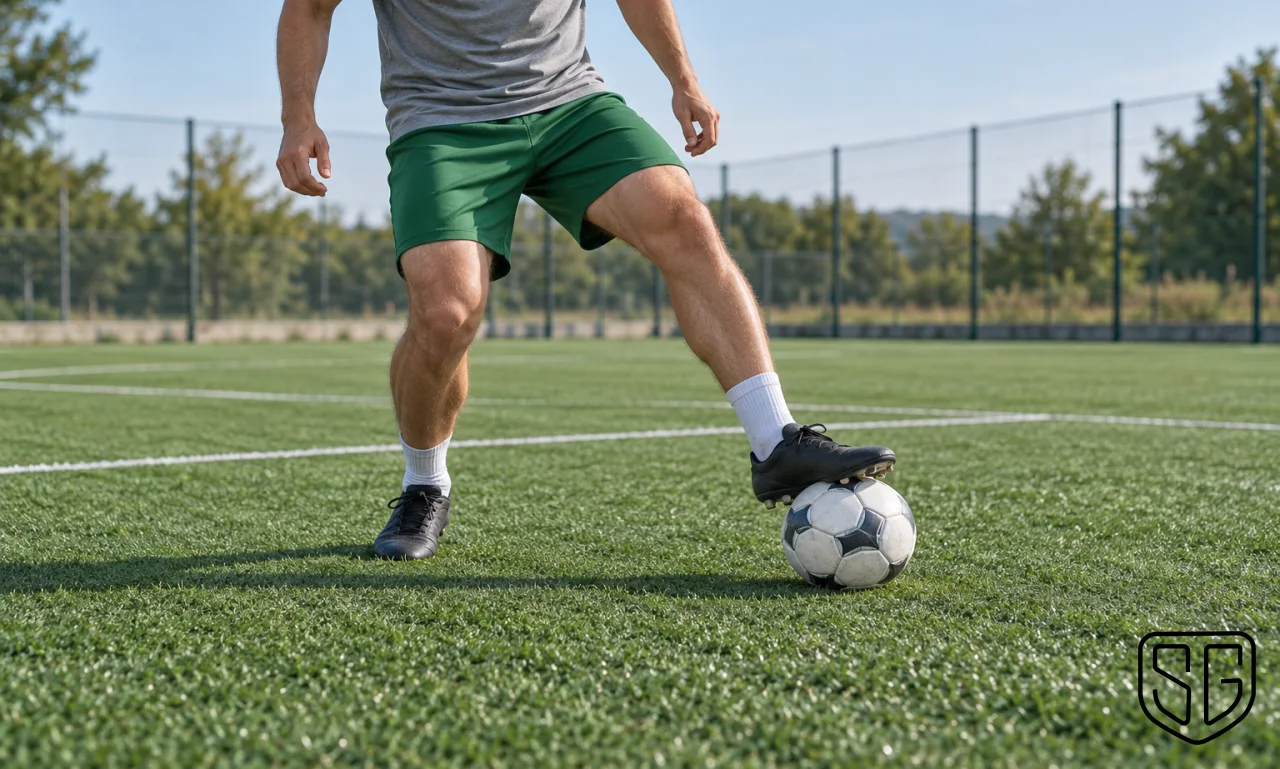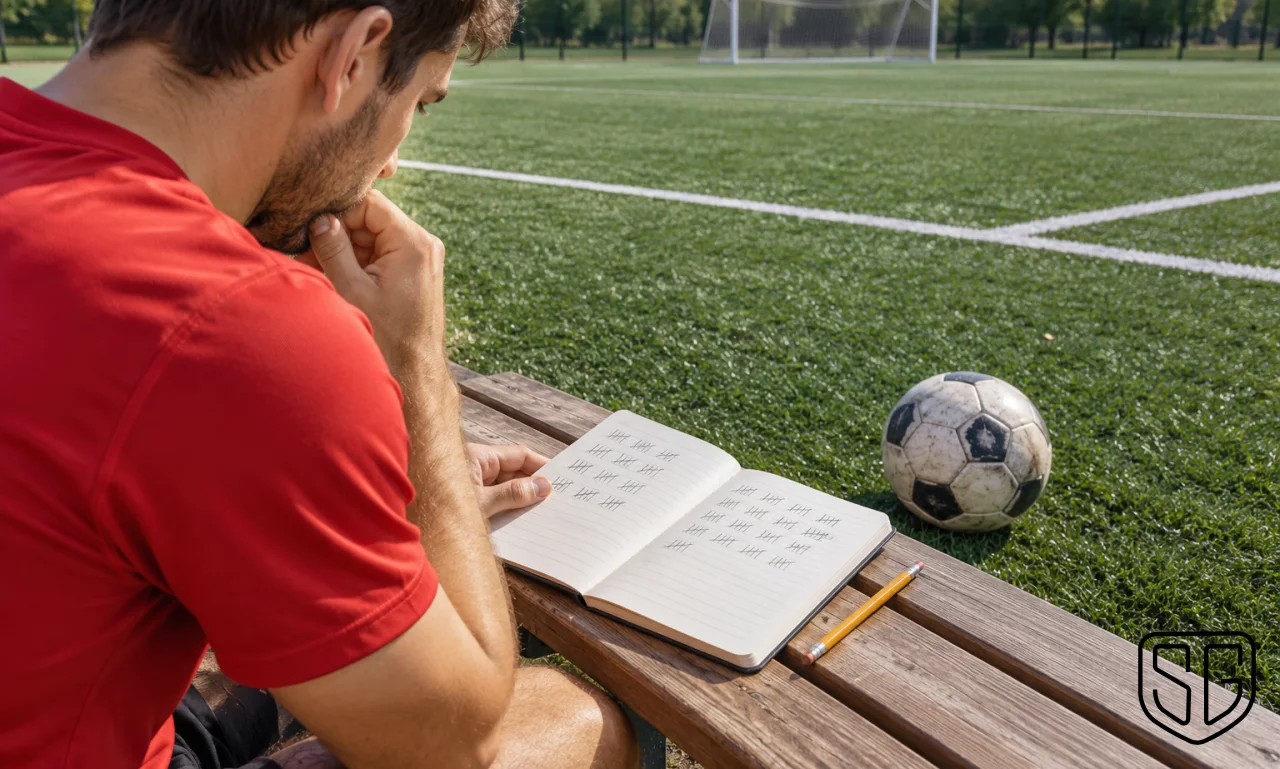
To measure progress in solo football training, choose a task you can repeat under similar conditions and define what a good attempt means. Counting every touch or recording total practice time tells you what you did, but not necessarily what became more reliable. A useful record connects the number to a football action and its purpose.
The method below is an original suggested review system, not a validated scouting test or an FA grading scale. You can use a notebook or an existing notes app; no new equipment or subscription is necessary. Keep recording simple enough that it supports practice instead of taking over the session.
Choose one question before choosing a score
Start with a specific difficulty. For example, does your first touch leave the ball close enough for an easy next pass? That question suggests a receiving task. A vague aim such as becoming better at everything gives you no clear way to decide what to observe or what to change afterwards.
The FA's November 2024 guidance on coaching impact recommends agreed targets, observation and reflection. This guide adapts that general approach for individual practice; the counts and examples below are not benchmarks taken from the FA. Your starting point and practice conditions matter more than somebody else's online score.
Write a repeatable baseline
Choose a safe, permitted setup. For a gentle wall-pass task, record the approved wall, approximate distance, ball, surface and receiving foot. Define a successful attempt before beginning: perhaps the reception remains within comfortable reach and permits the intended next pass. Use a broad practical definition rather than an unnecessarily exact measurement.
Try a small set, such as ten manageable deliveries, and record the result without discarding the awkward attempts. If wall passing is not permitted, choose another task you can repeat safely. Our solo passing-accuracy guide explains target-based work in more detail. A test should fit the available setting, not force the setting to fit it.
Keep the two feet and conditions separate
Record right-foot and left-foot results separately when that distinction is relevant. An overall total can hide a persistent difficulty on one side. Also note whether you changed the task: a shorter distance or gentler delivery may improve the count without showing improvement under the original conditions.
A simple entry could read: ten left-foot receptions, six usable next passes, same wall and distance, several touches finished behind the standing foot. This contains a result and a useful observation. It does not require a complicated rating system or a decimal score that suggests more precision than you actually measured.
Add a quality note to the count
For a dribbling route, count controlled finishes but also describe whether you needed emergency steps. For turning, note whether the exit touch stayed available. For receiving, record the direction of the first contact. Select one quality feature rather than trying to analyse your whole movement during every repetition.
The FA's April 2023 observation resource stresses having a clear focus and keeping notes manageable. If you use video, position the device safely outside the movement area and respect other people's privacy. Compare the same viewpoint where possible. A short recording can help recall an attempt, but it is not a professional biomechanical assessment.
Retest without turning practice into an exam
Repeat the baseline after a sensible period of practice rather than restarting it after every error. Use similar conditions and the same success definition. Keep both the earlier and later result. Do not keep testing until you obtain a flattering score, then compare that best set with an ordinary starting set.
Expect results to vary. A single lower count does not prove that learning has disappeared, just as one excellent set does not prove permanent improvement. Look for a pattern across repeated comparable attempts. If the task becomes comfortable, introduce one new challenge while preserving the original baseline for occasional comparison.
Check what remains untested
Solo scores do not measure every decision that arises in a match. The FA practice spectrum distinguishes unopposed technique from realistic game situations. When appropriate opportunities exist, ask a coach to observe whether your chosen action remains useful with teammates and opponents involved. Do not equate a tidy wall-pass count with guaranteed selection or match readiness.
End each review with one next step: repeat the same task, simplify a troublesome element or test a small progression. Our beginner training plan provides a possible calendar structure. The record is working when it helps you choose a better practice task, not when it produces the largest spreadsheet.