To work on football passing accuracy by yourself, separate direction, pace and preparation. A ball that travels through the right gap but arrives too hard is not the same as a useful pass. Start with a gentle delivery towards a safe ground target, then examine how the previous touch affects your ability to repeat it.
This guide presents an original suggested practice session, not an official prescribed programme. It is intended for a suitable clear area where football is permitted. Use appropriate footwear and leave enough room for the ball to stop. Do not turn windows, parked cars, doors or pedestrians into targets, even when you intend to pass softly.
Choose a target you can judge consistently
Use an existing painted ground line or a permitted temporary mark. Pick a short section to cross and a comfortable starting distance. Walk the route first to check the surface and the space beyond it. If a missed pass could reach a road or another person's property, move the exercise elsewhere.
Try five gentle passes from the same starting point. Count those that cross the target section at a controlled pace, then note whether misses went left, right, short or long. These numbers are a suggested way to organise observation, not a universal coaching benchmark. Use a wider target if every attempt becomes a chase.
Begin with one simple contact
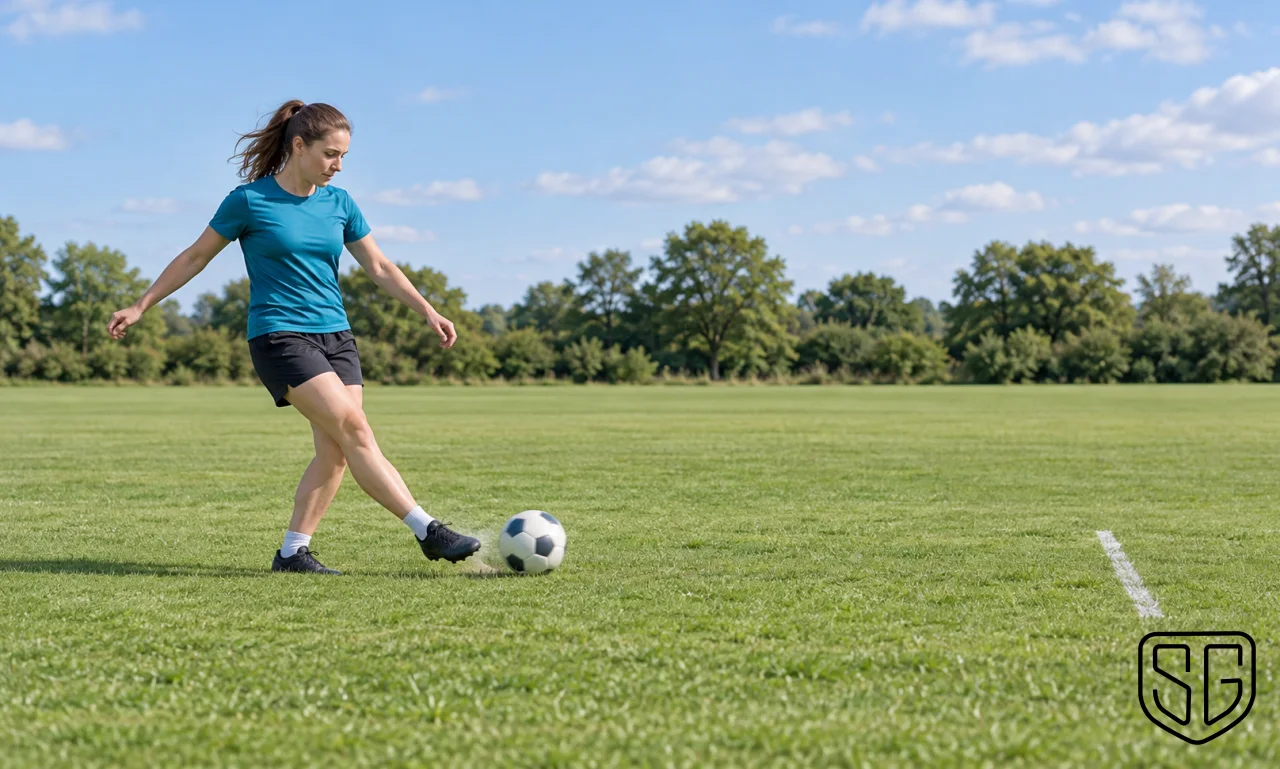
The FA passing guide describes the inside-foot pass as a useful accurate technique, while explaining that other contacts serve different situations. Begin with an inside-foot delivery so you can compare similar attempts. Look at the target, set yourself comfortably and make a controlled swing rather than trying to generate maximum power.
If the ball repeatedly veers to one side, pause and examine your approach and contact. Make one small adjustment, then repeat from the same place. Do not change your distance, target width and technique at once. A result becomes difficult to interpret when every attempt has different conditions.
Test pace as well as direction
Choose a safe finishing area beyond the target line. Aim to pass through the target and have the ball slow within that area. This creates two separate checks: the route it takes and the distance it travels. Start on level ground because a slope can change the finishing position even when the contact feels similar.
A pass stopping inside the area is only a practice measure. It does not reproduce a moving team-mate, a defensive interception or the speed a match requires. Record it as a controlled ground-pass test rather than claiming that a particular score proves match readiness or guarantees the same success under pressure.
Add the touch before the pass
Roll the ball gently towards yourself, take a preparatory touch and then pass to the same target. Notice whether that touch gives you enough room to swing comfortably. If it leaves the ball underneath you or too far away, reset. Do not rescue every poor preparation with an awkward stretching pass.
Where you have permission to use a suitable outdoor rebound wall, make a soft pass, receive the return and prepare the next delivery. Keep clear of windows and anyone entering the rebound area. Our beginner wall-passing guide covers that option; a wall is helpful but is not necessary for the ground-target test.
Compare feet without forcing equal difficulty
Repeat a short round with the less comfortable foot. Move closer or widen the target if needed, and record the changed conditions. You are learning which action needs attention, not staging a contest between your feet. A calm accurate pass from a shorter distance is a sensible starting task.
Use our weak-foot training guide for slower contact work. Stop when balance or concentration deteriorates. Increasing the number of attempts while repeating the same uncontrolled movement does not necessarily address the problem you identified in the first round.
Know what an individual session cannot test
The FA practice spectrum separates technical repetition from realistic game situations. Solo targets let you observe delivery, but cannot tell you whether a team-mate would prefer the ball to feet or into space. They also remove the changing time and pressure that influence passing choices in a match.
Finish by choosing one observation for the next suitable game or coached session: a softer contact, a better preparation touch or a clearer look before delivery. Retest the original route on another day using similar conditions. Measure dependable direction and pace first, then seek feedback on whether those passes help the player receiving them.