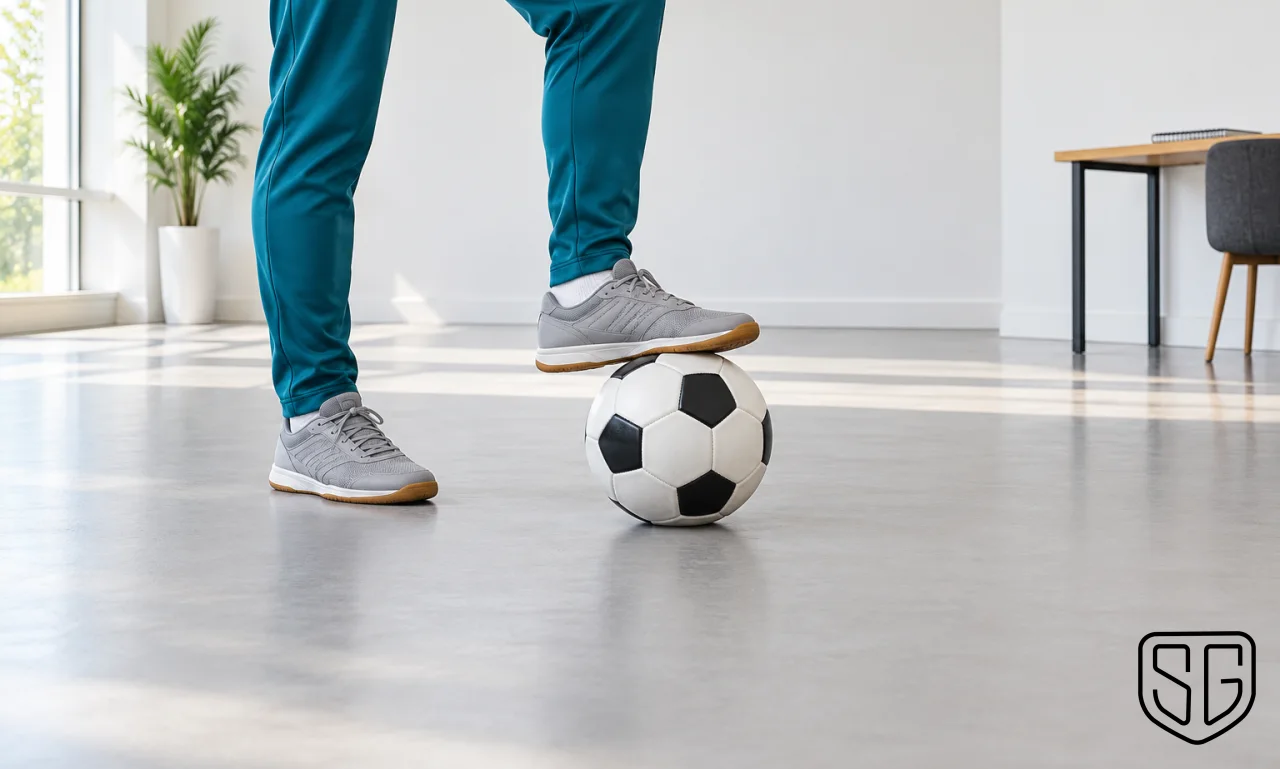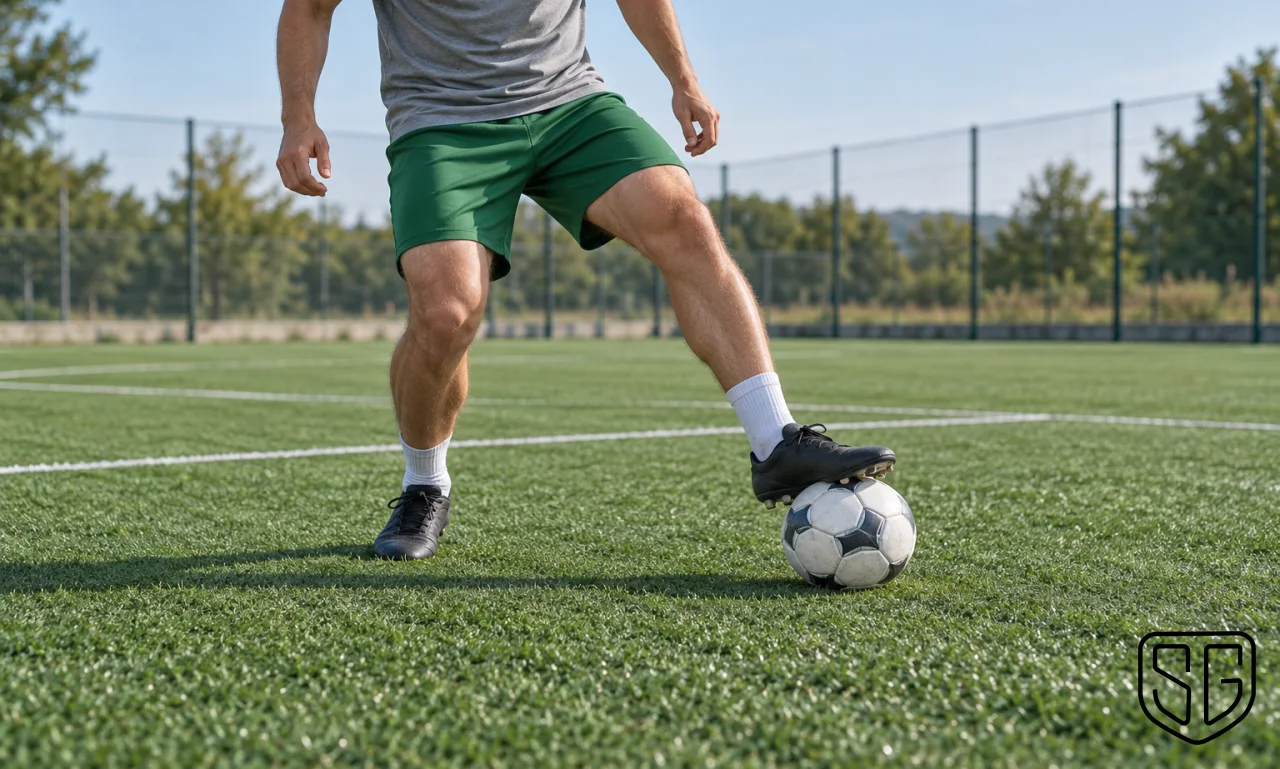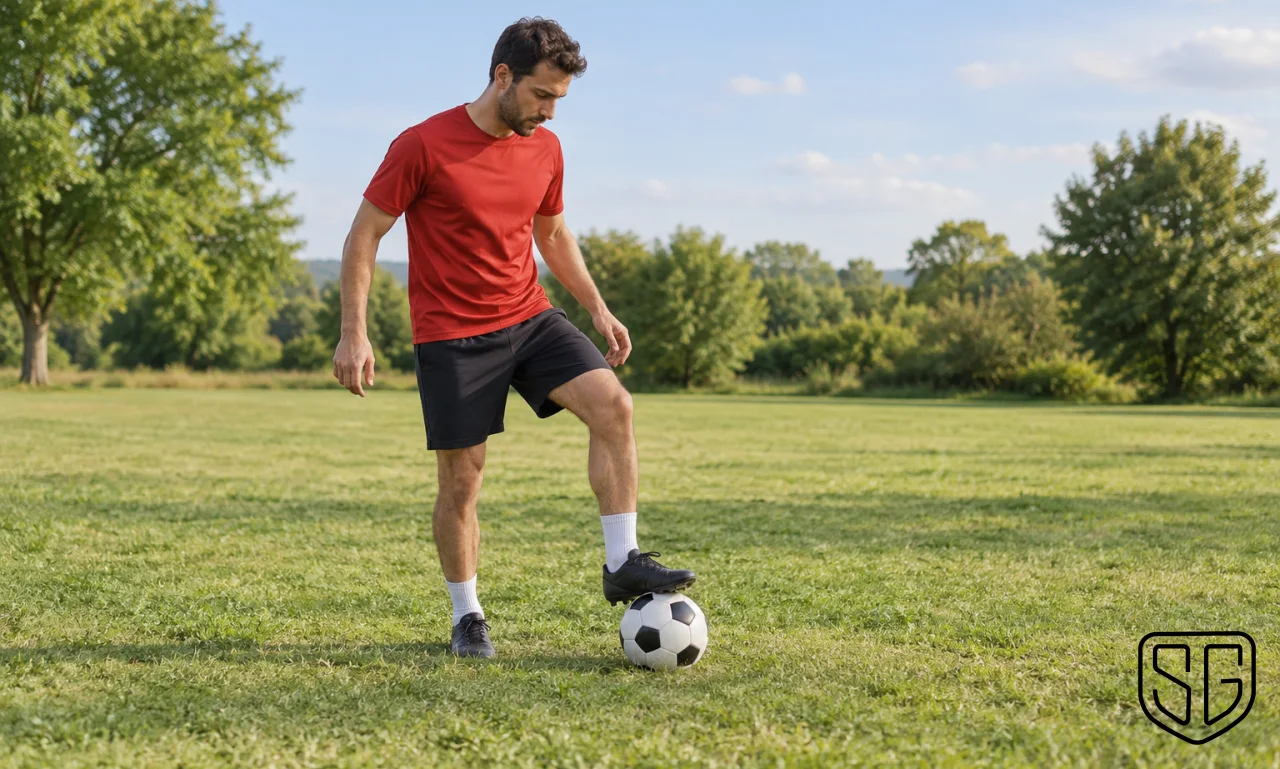
You can work on football skills without a proper pitch by matching the task to the space you genuinely have. A safe permitted grass area may suit gentle passing and turns, while a small indoor space may permit only quiet stationary touches. The absence of painted boundaries is less important than whether the surface and surroundings support the activity.
This is an original practical planning guide, not an official training programme or a claim that any open area is suitable. Obtain permission where needed, use appropriate footwear and respect people sharing the space. If you cannot find somewhere safe, choose observation or planning instead of forcing a ball session into an unsuitable location.
Assess the surface before choosing the drill
Walk the area first. Look for uneven ground, holes, loose objects, slippery patches and routes used by pedestrians. Check where a missed touch could travel. A clear starting spot is not sufficient if the ball can escape towards a road, glass or somebody else's belongings after one ordinary mistake.
Do not assume that hard ground is interchangeable with grass. Keep movement gentle and controlled, and avoid sliding challenges or powerful strikes in an improvised space. If the surface does not allow secure footing, change location. Better technique cannot compensate for a practice area that repeatedly creates a fall or collision risk.
Choose the action the space can support
In a small clear area, practise stopping a slowly rolling ball, gentle sole rolls or short inside-foot contacts. Leave space to regain balance. England Football Learning describes ball mastery through varied contacts, directions and speeds; an improvised session can explore a manageable part of that range without pretending to reproduce a whole match.
On a larger safe patch, add walking dribbles and comfortable turns. Use existing ground markings or imagined turning areas rather than placing trip hazards around you. Our dribbling-without-cones guide explains how to organise a route while keeping equipment demands low.
Make a target without creating a hazard
For gentle passing, choose a permitted ground mark and a generous stopping area beyond it. Aim for direction and manageable pace. A doorway, car tyre or window is not an acceptable target simply because it has a convenient shape. Make the surroundings part of the decision before you begin, not a problem to solve after a miss.
A suitable rebound wall can be useful only with the owner's permission and a clear return path. Otherwise, pass into open safe space and retrieve the ball at walking pace. Our practice guide without a goal or net offers ground-target options without implying that a wall or goal is essential.
Adapt expectations when conditions change
A ball may roll differently on a rough patch, a smooth court or a short carpet. Record the location when comparing attempts. If one session uses a slower surface, a higher success count does not automatically mean your receiving has improved. Repeat a simple test under similar conditions before drawing conclusions from the totals.
Choose one detail to observe, such as whether a turn leaves the ball within reach or a gentle pass crosses the intended mark. Avoid treating a large number of touches as the only goal. That can encourage rushed movements even when the actual problem is balance, contact or judging how much space remains.
Keep shared spaces usable for everyone
Pause when people enter the practice area, reduce noise where appropriate and stop if the location becomes crowded. Do not expect strangers to act as moving obstacles. Indoors, remove fragile objects only with permission and avoid overhead throws, lifting the ball near lights or hard shots against walls.
A quieter session can still have a clear purpose. For example, use five controlled stops, a short pause and five turns in each direction as a suggested starting task. Those numbers are an example rather than a prescribed workload. Shorten the activity if you lose control or cannot maintain comfortable movement.
Recognise the limits of improvised practice
The FA practice spectrum distinguishes technique work from using skills in realistic football situations. A small patch can help you explore contact, but cannot supply the spacing, moving team-mates and opponent decisions of a game. Seek suitable coached or small-sided opportunities when available instead of assuming solo comfort transfers automatically.
Keep a note of what the space allowed and what you still need to test elsewhere. A pitch-free session is a supplement with specific limits, not a lesser version of every possible activity. The most useful choice is the one that gives you safe, attentive practice on an observable task while leaving the area ready for its other users.