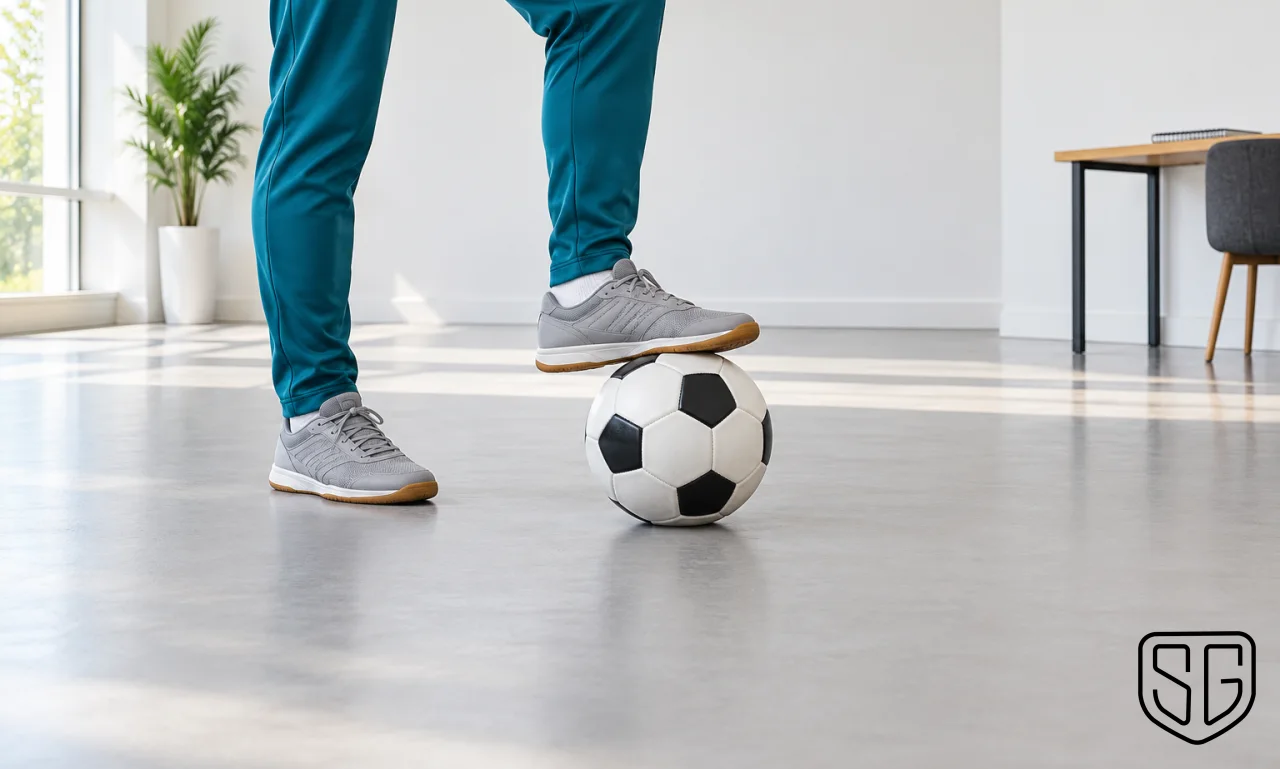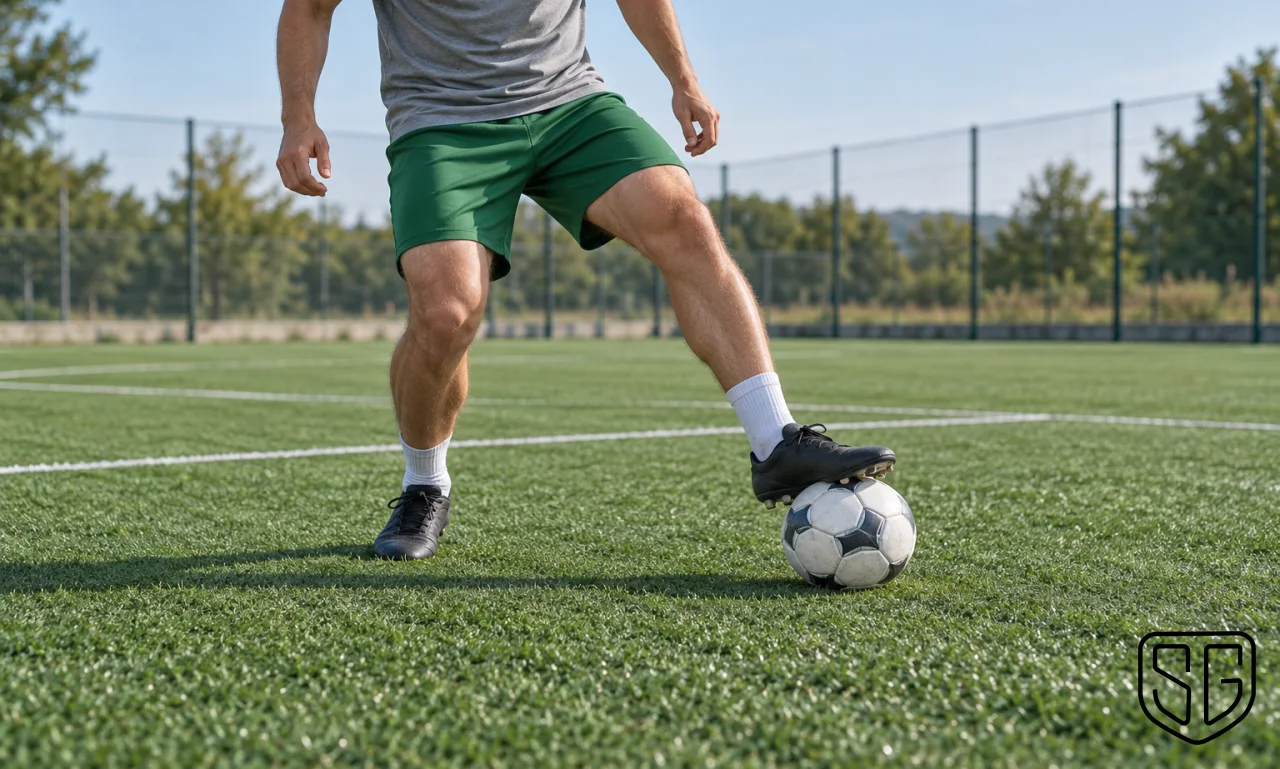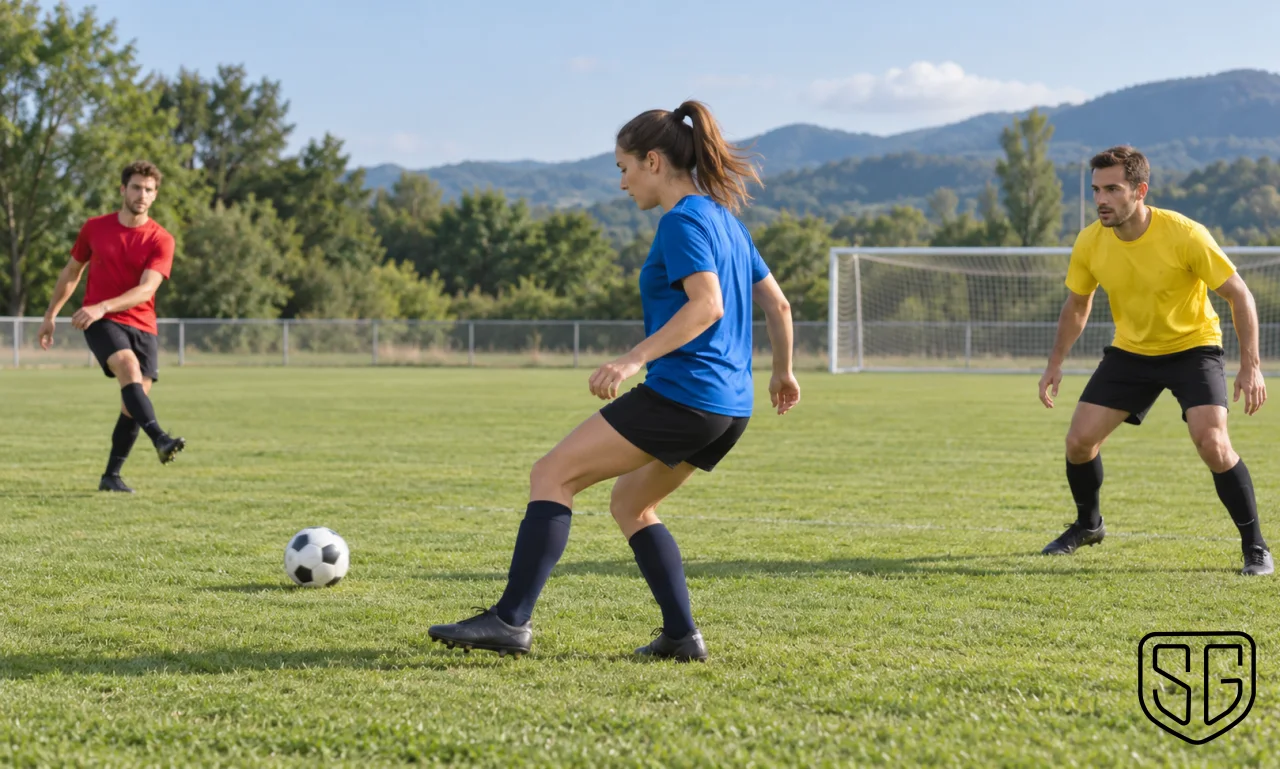
Receiving a football under pressure means controlling a pass while responding to an opponent and the space around you. A clean first touch is part of that task, but so is recognising whether to turn, protect possession or return the ball. Practise the decision alongside the contact instead of assuming that every reception should lead forwards.
This guide offers an original suggested progression for beginners. You can prepare some elements alone, but you cannot fully recreate an opponent's choices without another player. Start in a safe clear area with appropriate footwear and willing participants. Agree the rules before adding pressure, and keep early challenges controlled rather than physical.
Prepare the receiving touch without opposition
Begin with gentle passes from a partner or a permitted outdoor rebound wall. Receive into a generous clear area, then make a simple next pass. Notice where the ball finishes relative to your body. A touch that repeatedly leaves you stretching or stepping backwards may make the next action unnecessarily difficult.
Our solo first-touch guide covers this preparatory work. Repeat a manageable task before increasing delivery speed. The aim is to recognise the relationship between the incoming ball and a useful next contact, not to produce a particular turn regardless of where the pass arrives.
Look before the ball arrives
With a partner, identify two safe exit areas before each pass. Briefly check the space, return your attention to the delivery and receive towards an appropriate exit. Begin slowly enough to complete both observations. If looking away causes repeated missed receptions, simplify the pass rather than trying to glance for longer.
The FA passing guidance treats positioning, scanning and timing as part of effective play, alongside technique. In this suggested exercise, checking the space gives the first touch a reason. A self-chosen exit remains predictable, however, so treat it as preparation rather than evidence that you have mastered pressure.
Introduce a guide, not an aggressive tackle
Add a third participant who approaches from one side after the pass begins. Initially, ask that player to indicate pressure through position only, without tackling. The receiver chooses whether to move away, protect the ball or pass back. Leave enough room to stop and avoid any collision with the approaching player.
Swap roles so everyone experiences receiving, passing and approaching. Agree a comfortable pace and restart when the delivery makes the task unsuitable. This creates a changing cue without immediately demanding full opposition. It is an example practice design, not an FA-prescribed drill or a guarantee of improvement within a fixed number of sessions.
Allow more than one successful answer
If the defender blocks the forward exit, a return pass can be a good solution. If space opens on the other side, a touch away from pressure may be appropriate. Do not mark every backwards pass as failure. Judge whether the action keeps the ball available and fits the situation the players actually created.
The FA ball-mastery resource for young players discusses screening, shielding and turning when passing options are restricted. Apply the broad idea with care: protecting possession does not mean pushing an opponent or stretching into dangerous contact. Use a qualified coach to help manage contested activities, particularly with children or mixed experience levels.
Move towards realistic play gradually
When the group is comfortable, use an appropriate small-sided activity where receiving leads into another football action. Let defenders influence the next decision within agreed rules. The FA practice spectrum explains the difference between unopposed technique work and applying skills in realistic games. Both have a purpose, but they test different things.
Keep the activity manageable. One receiver facing several fast challengers may receive little useful practice if possession is lost before they can observe anything. Adjust the space, delivery or level of pressure rather than asking the receiver to solve every difficulty through a supposedly perfect first touch.
Review the decision and the contact separately
After a short round, identify whether an error came from missing information, choosing a blocked route or miscontrolling the pass. These require different corrections. A technically neat touch towards a defender can still be the wrong decision; a sensible decision can fail because the contact sends the ball too far.
Record one example of each and revisit the weaker element next time. For delivery work, use our passing-accuracy guide. Solo practice can support your preparation, but genuine receiving under pressure eventually needs the changing information supplied by other players, not simply a faster timer or a smaller target.